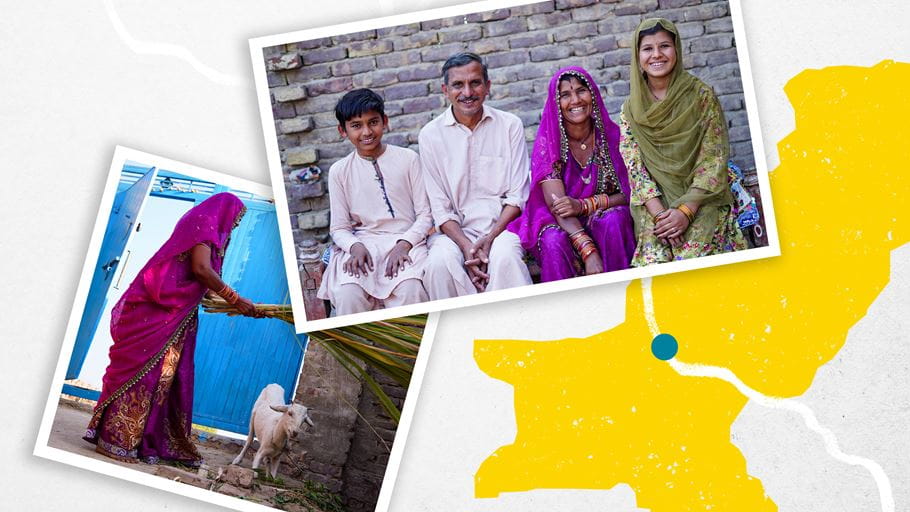
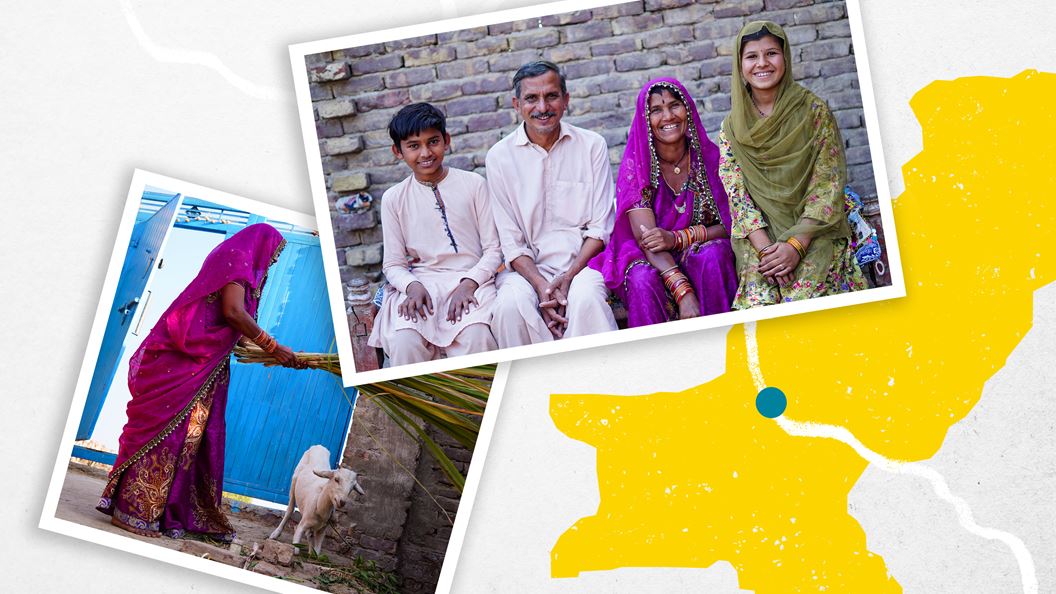
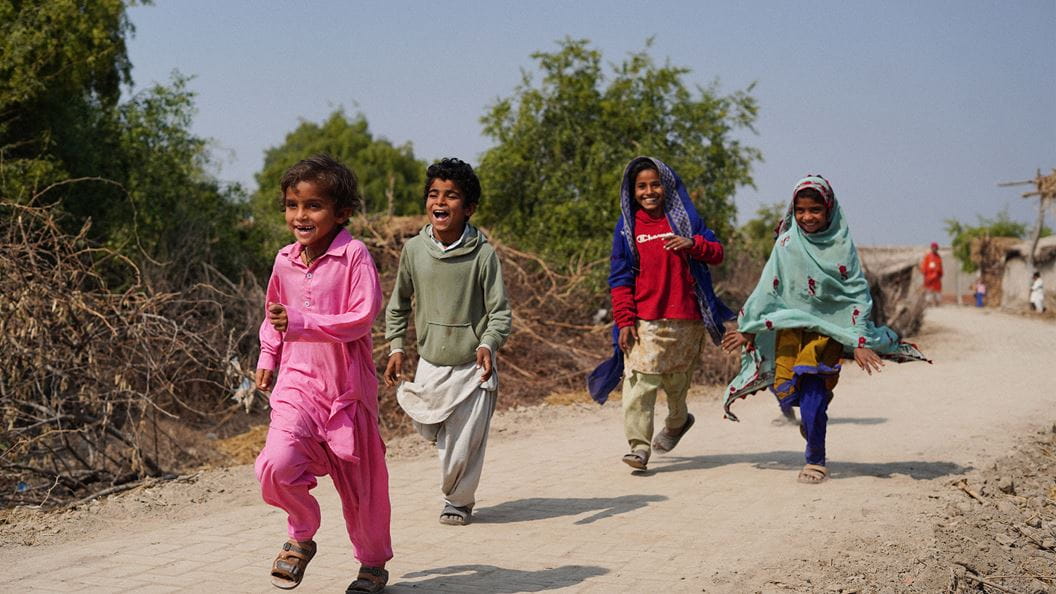
Forced to migrate from Umerkot when the government constructed a canal following the floods in 2022, Khatoon, now aged 40, relocated to her current home, Mirpurkhas, which is 47 miles away.
‘A small drainage canal was constructed by the government, and our home was in its path. Because the land was not owned by us, we were forced to leave,’ Khatoon says. Her brother generously gave her land, but they had to rebuild their home, slowly, from scratch.
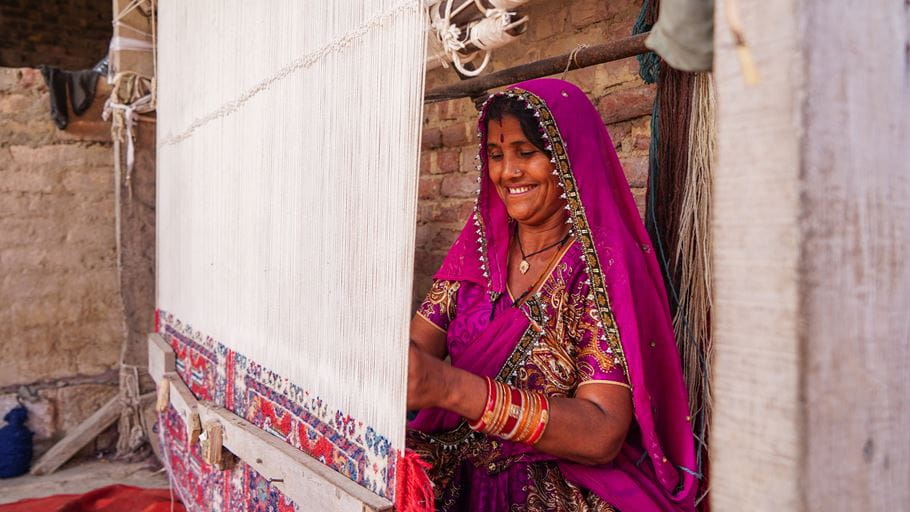
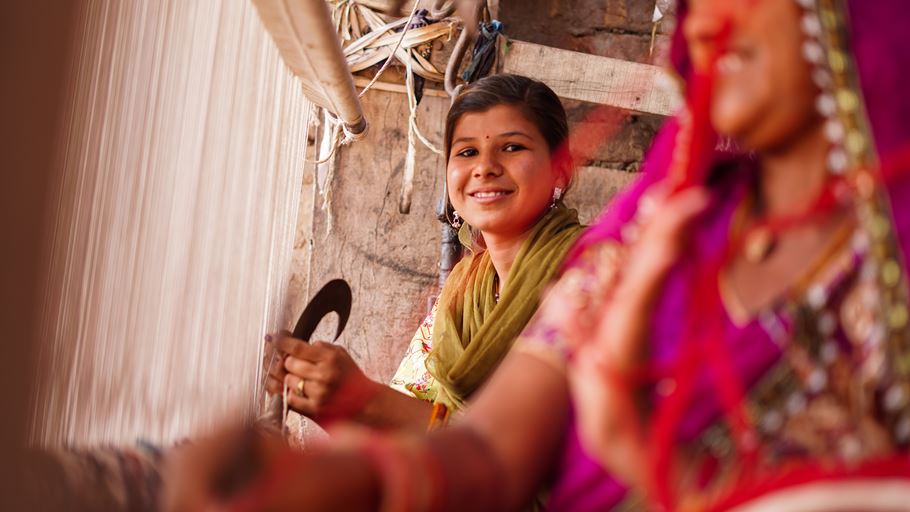
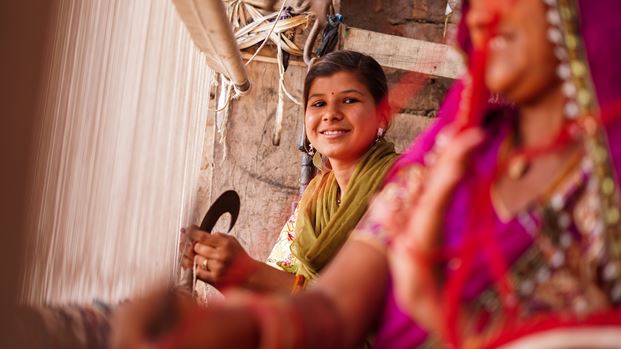
Life was challenging. Her son works as a labourer in Karachi, while Khatoon weaves carpets to contribute to the household costs. At first, progress was difficult.
‘Before, our income was around 200 rupees [53p] a day, and we struggled to buy necessities like clothes and livestock.’ Because of their money struggles, Khatoon’s children couldn’t go to school. ‘I couldn’t afford children’s education with the money we earned.’
The family was given a lifeline when the Society for Safe Environment and Welfare of Agrarians in Pakistan (SSEWA-Pak), a Tearfund partner, provided a grant of 100,000 rupees [£265]. This meant Khatoon didn’t have to rely on exploitative middlemen who were taking advantage of her by paying less for her labour.
‘The money was for my carpet weaving,’ she says. It helped her to buy raw materials in bulk, expand her weaving tools and produce larger carpets. ‘Before, we could only make single-size carpets. Now we can weave a double.’