
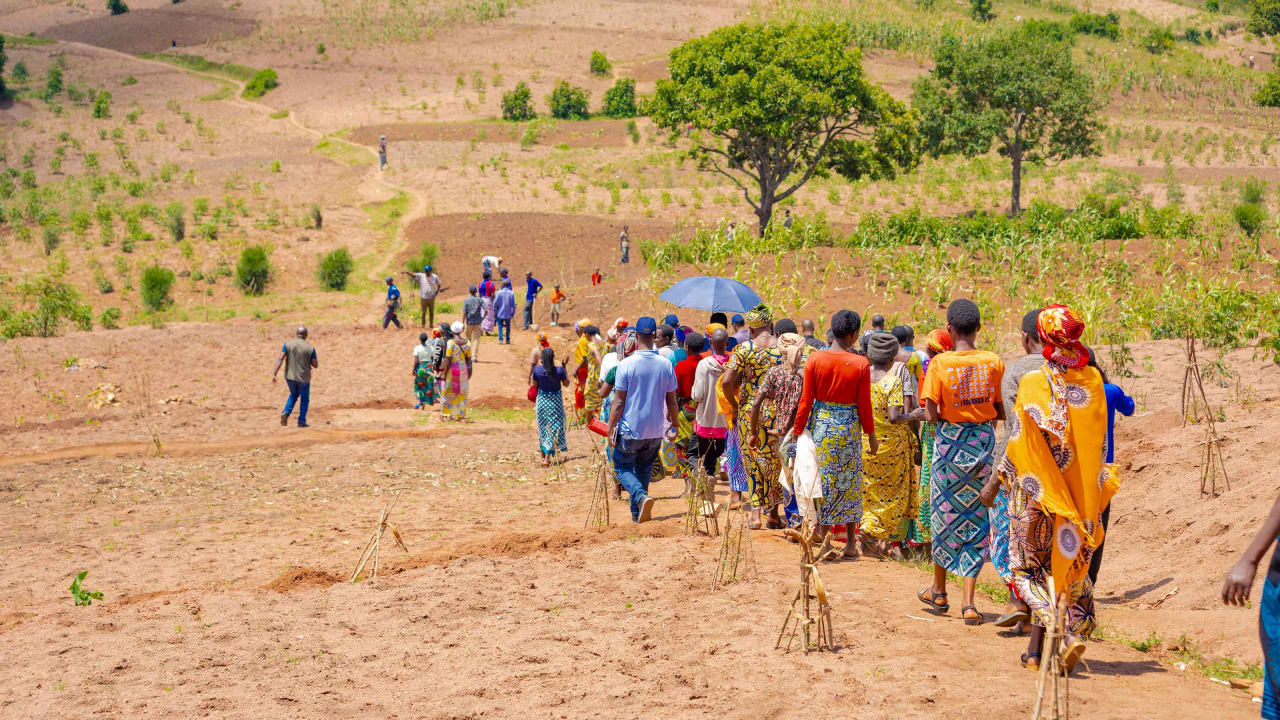
This report was initiated by Tearfund as part of an environmental restoration project in Rwanda's Southern Province funded by the UK government through the REDAA programme (Reversing Environmental Degradation in Africa and Asia). It provides a review of Rwanda's national climate policies and assesses their implementation and effectiveness at the grassroots level, as well as a comprehensive assessment of climate vulnerability and risks in Huye and Gisagara districts.
The research used a mixed-research methodology (quantitative and qualitative). The findings confirm that these regions face high vulnerability to climate change: their exposure and sensitivity to climate-related phenomena (erratic rainfall, prolonged dry season, soil erosion), and the impact of these have all increased. In the last five years, the overall vulnerability index score decreased slightly in Huye (0.556) due to stronger adaptive capacity, while Gisagara's vulnerability increased to 0.626, underscoring persistent challenges.
Smallholder farmers show a strong willingness to adopt sustainable practices like agroforestry and terracing. However, adoption is hindered by barriers such as limited access to training, quality inputs, and financial resources.
Policy evaluations found that national climate strategies are highly relevant to local communities and have led to positive changes, yet implementation gaps persist, particularly in coordination, and reaching the most vulnerable communities with targeted training and support.
The research informs Tearfund's programme which is equipping communities, and particularly women, in locally led restoration efforts through capacity building in nature-based solutions. This increases community participation in environmental decision-making processes and equips local stakeholders with relevant skills and technical knowledge for improved environmental monitoring and management.