Skip to content Skip to cookie consent
Tearfund home
Donate

Moving from fear to a firm foundation

How do we stay informed without being overwhelmed? Explore a biblical blueprint for finding peace in the news.

31 Mar 2026

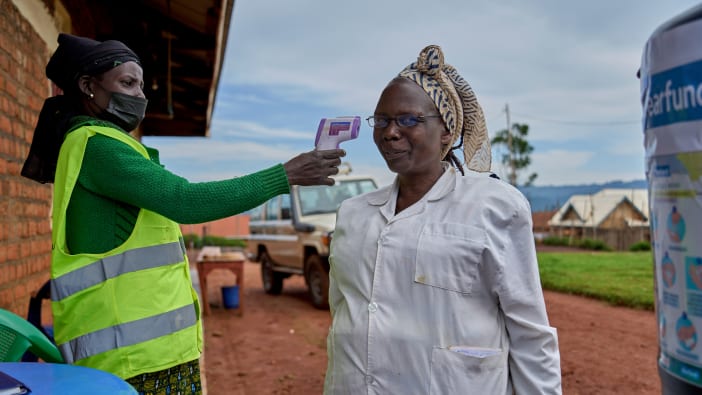
Three boys fishing on a rock as the sun sets over calm waters in the Democratic Republic of Congo.

Credit: Tom Heath/Tearfund

News cycles. Social media feeds. Channel-surfing or phone-scrolling to find a distraction or satisfaction. While it is so important that we stay informed about our world and the injustices affecting people in need, we can so easily slip into a sense of helplessness.

How many times do we feel the weight of the world on our shoulders, its burden slowly disrupting our peace? We often feel responsible on our own for responding to the cries of people in need.

However, this was never our burden to carry, and when we try, it can lead to compassion fatigue rather than lasting change for ourselves and the world around us.

In this first entry of a three-part series, we’ll begin exploring reflections from our global colleagues on how to stand firm in the storms of the world.

Seeking peace in shifting sands

We live in an age of digital saturation where global crises are delivered to our pockets in real-time. Whether it’s the heartbreak of conflict, the urgency of the climate crisis, or the weight of extreme poverty, the current of information is relentless. It is easy to feel that our peace is being eroded by a tide of anxiety and anger.

However, let us be reminded of a profound warning from Jesus about where we choose to stand:

‘But everyone who hears these words of mine and does not put them into practice is like a foolish man who built his house on sand. The rain came down, the streams rose, and the winds blew and beat against that house, and it fell with a great crash.’ (Matthew 7:26-27)

The ‘foolish’ path isn't staying informed. It’s trying to process that information on a foundation of just our own strength. To step up and speak up for justice effectively and sustainably, we must first ensure our own house is built upon the rock.
‘The ‘foolish’ path isn't staying informed. It’s trying to process that information on a foundation of just our own strength.’

Nehemiah’s ‘blueprint’ for not ignoring our emotions

Richard Serrano, the Theology and Network Engagement Manager in our Latin America team, suggests that we must look closely at what happens to us in the immediate aftermath of the news. He asks: ‘What do we do when we learn of situations that weigh heavily on our hearts?’

To find an answer, Richard points us to Nehemiah. Upon hearing that the walls of Jerusalem were broken down and that his people were in great distress, he didn’t immediately rush into action or spiral into catastrophising. Instead, Nehemiah modeled a healthy way to manage his emotions at that moment of impact.

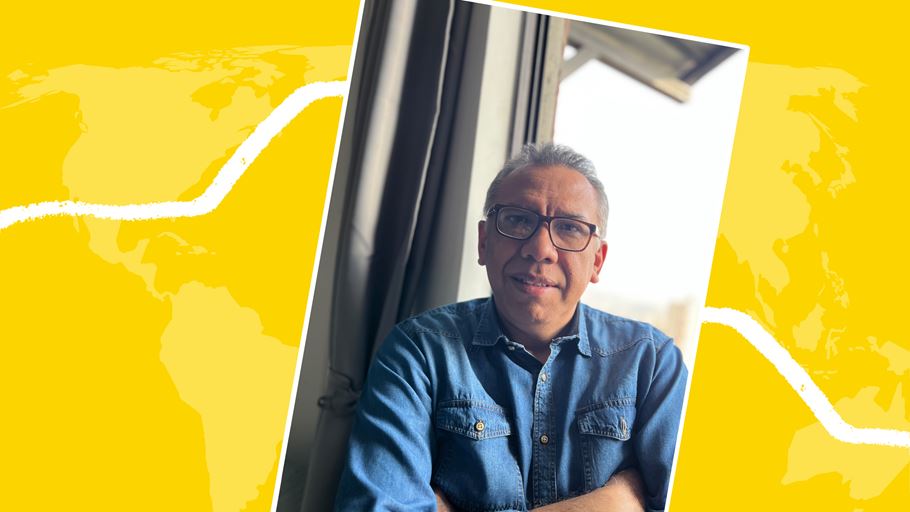
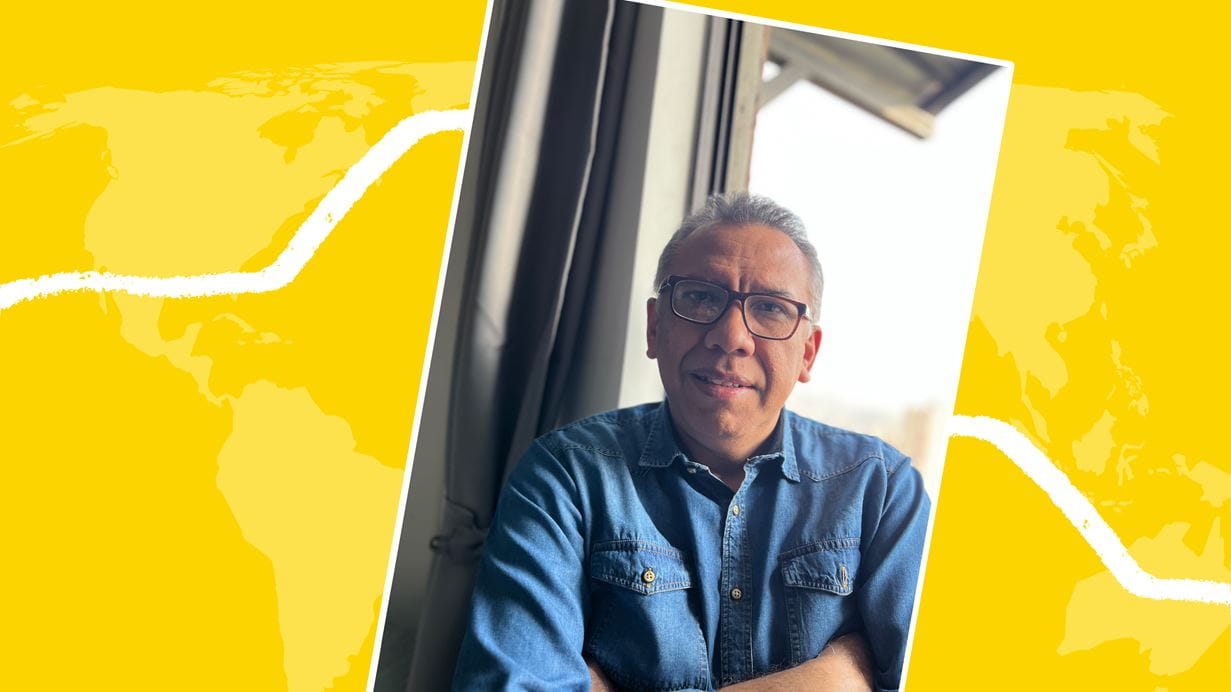
Man in denim shirt with arms crossed, smiling; yellow background with world map graphic.

Credit: Richard Serrano

‘By acknowledging our grief, we prevent the news from becoming a buried weight that leads to burnout. Instead, we hold our humanity in harmony with our faith.’

‘When I heard these words, I sat down and wept…’ (Nehemiah 1:4). Richard says that Nehemiah’s first step was to ‘express [his] emotions: it is not a lack of faith, it is a matter of humanity.’ By acknowledging our grief, we prevent the news from becoming a buried weight that leads to burnout. Instead, we hold our humanity in harmony with our faith.

This is an important step. As Richard says, we can follow Nehemiah’s journey from raw emotion into intentional discipline (Nehemiah 1:4-8). Rather than seeking a distraction, we are invited to dedicate time to prayer, silence, mourning and fasting. We can use that space to ‘appeal to God’s promises, remember his faithfulness and his word, and rest in it,’ Richard continues.

This isn't a retreat from reality, but a preparation for it. Once we have committed to guarding our hearts and honouring God in our prayers, feelings, thoughts, and words, Richard encourages us to ask if there is ‘anything I can do about it, as well as praying?’

What does this mean for you today?

If you are feeling overwhelmed, angry or afraid, Nehemiah’s example reassures us that God encourages us to express those emotions. From there, we can move into taking action on a firm foundation of true peace and security in him.

Take a moment to pause and reflect.

What does the weight of the world look like for you? Are there any emotions you have been ignoring or keeping from God, leaving your peace threatened or disturbed?

Let’s pray together

    • For the ‘moment of impact’: Pray that when you hear difficult news, your first instinct is to sit with God, acknowledging the weight of it without being crushed and handing that weight to him.
    • For the situation: Ask God how you can pray specifically for the people and events you have heard about in the news. Pray for people facing distress or injustice, trusting that intercession is the first action we can take.
    • For our foundations: Ask God for the grace to move away from the shifting sands of self-reliance and the world at large, and instead rest in his promises that remain firm and true.
    • For wisdom and action: Pray for the compassion to ask what you can do, and for the courage to act in a way that brings lasting change.

Share this page

Share this page to spread the word and help support those in need.

Get our email updates

Learn about our work and stay in touch with Tearfund. Hear about our news, activities and appeals by email.

Sign up now - Get our email updates