Skip to content Skip to cookie consent
Tearfund home
Donate

Menstruation in Malawi. A period drama

How dispelling stigma around menstruation is helping keep girls in education and giving them opportunities to thrive.

Written by Tarryn Pegna | 22 May 2026

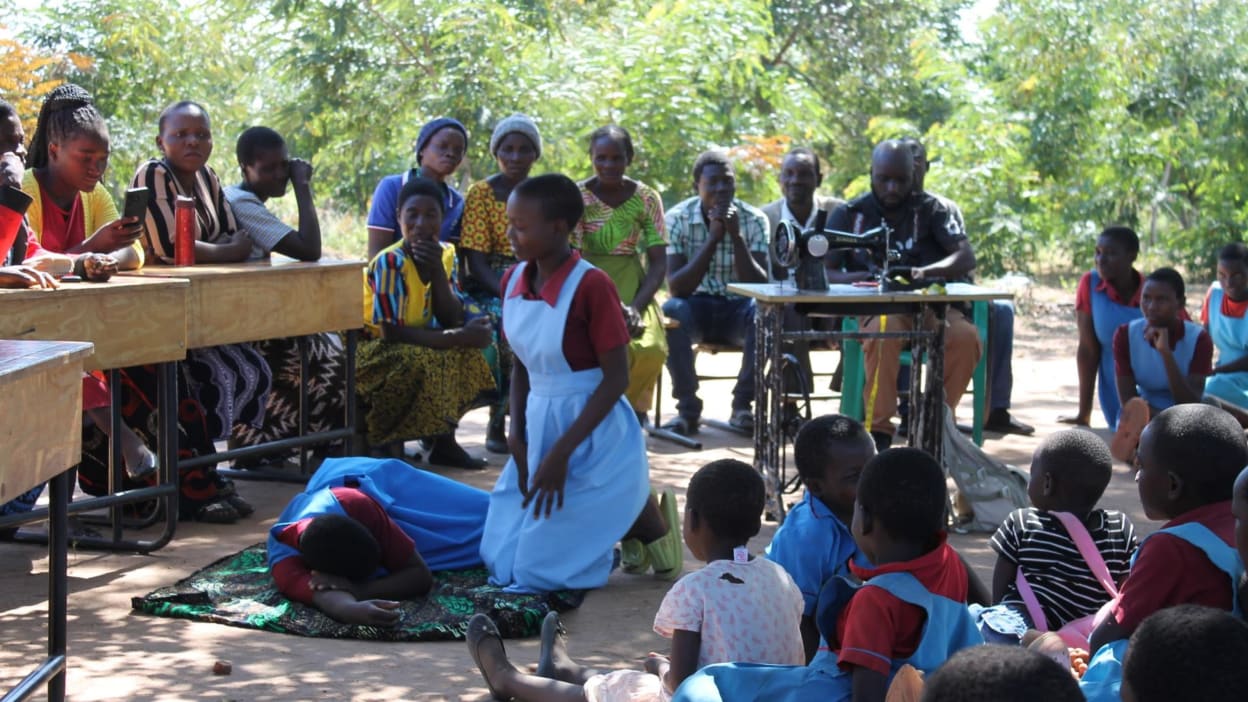
Group of students and adults gathered outdoors; sewing machine present.

School girls in Malawi perform a drama about having their first period. In the background, members of the PTA (Parent Teacher Association) make reusable sanitary pads. Dispelling stigma is a crucial part of keeping young women and girls in education and giving them opportunities to thrive. Credit: Rachel Stevens/Tearfund

In May 2025, in the course of her role as Tearfund’s Global WASH* Specialist, Rachel Stevens spent some time travelling in Malawi to visit projects and programmes that we have supported and implemented over the past few years.

One of the places she visited was a school called Khankombe, in Salima District, where,  in 2021, Tearfund had supported our local partner, AG Care, to build two latrine blocks in the school, one for the boys, and one for the girls.

Clean toilets support full classrooms

It will come as no surprise to any of us that having access to a safe, hygienic toilet is crucial to keeping young people in lessons. After all, how can anyone possibly be expected to concentrate, or even fully participate, if they’re distracted by worrying about where and when they might next be able to use a loo? Without clean waste management systems,  opportunities for disease and illness to spread are so much greater than when there is an appropriate option for ablutions.

But, for girls who are becoming young women, there is an even greater need for somewhere private to use.

The monthly menstruation taboo

In Malawi, as in many other places around the world, issues like not having safe, clean toilets, along with unhelpful cultural stigma around menstruation, keeps girls out of the classroom during their period. In fact, UNESCO reports that in Sub-Saharan Africa, the proportion of girls this affects is as much as one in every ten. For some, shame, discomfort and the lack of necessary resources can make this absence permanent.

Taboos around periods mean that girls and women who are having their period are seen as unclean. This very normal part of life is treated as embarrassing, dirty, inhibiting and something not to be discussed. And so, women and girls are excluded from all kinds of activities.
Drama, sanitary pads and transforming stigma

In light of all this, visiting some four years after the latrines had been installed, Rachel was thrilled to find evidence of a significant shift!

For a start, the toilets looked like new, but were evidently being well used.

The learners had taken immense pride in having toilets available on the school premises.

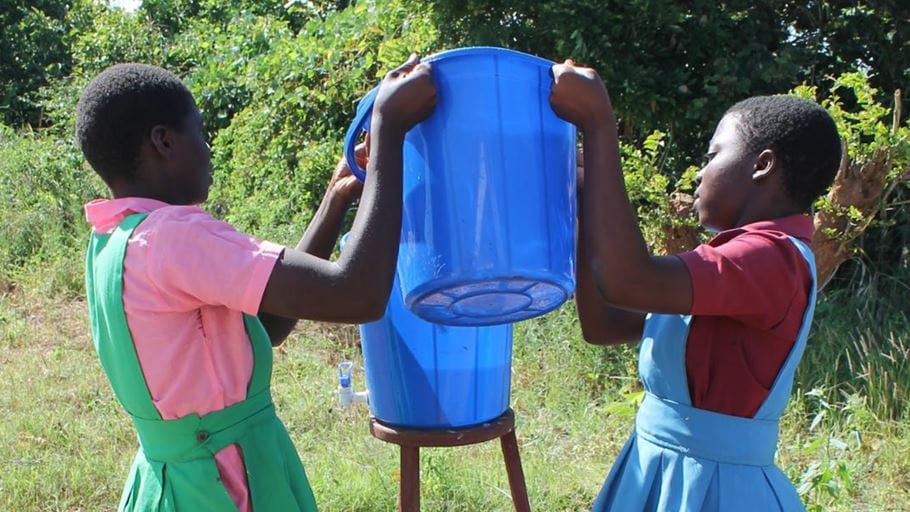
‘They have a rota pinned up on the wall of each block,’ explains Rachel, ‘and they take it in turns to clean out the cubicles, and to ensure water and soap are available at the handwashing station.

‘And beyond that,’ she smiles, ‘it was amazing to sit under the shade of a huge tree on the school grounds while a couple of girl learners did a drama in front of the whole school – including the boys – to dispel some of the local myths around menstruation!

‘The PTA (Parent Teacher Association) have also been trained and equipped to make reusable sanitary pads to give to the girls when they start their periods.’

Rachel goes on to say, ‘This brought such great joy, as I saw stigma around menstruation being addressed openly, and because of it, girls being able to stay in school when they have their monthly periods!

‘Please be encouraged that situations can change beyond what we could think. One change can have ripple effects, bringing wider change and transformation. Even long-standing issues can become areas of joy.’

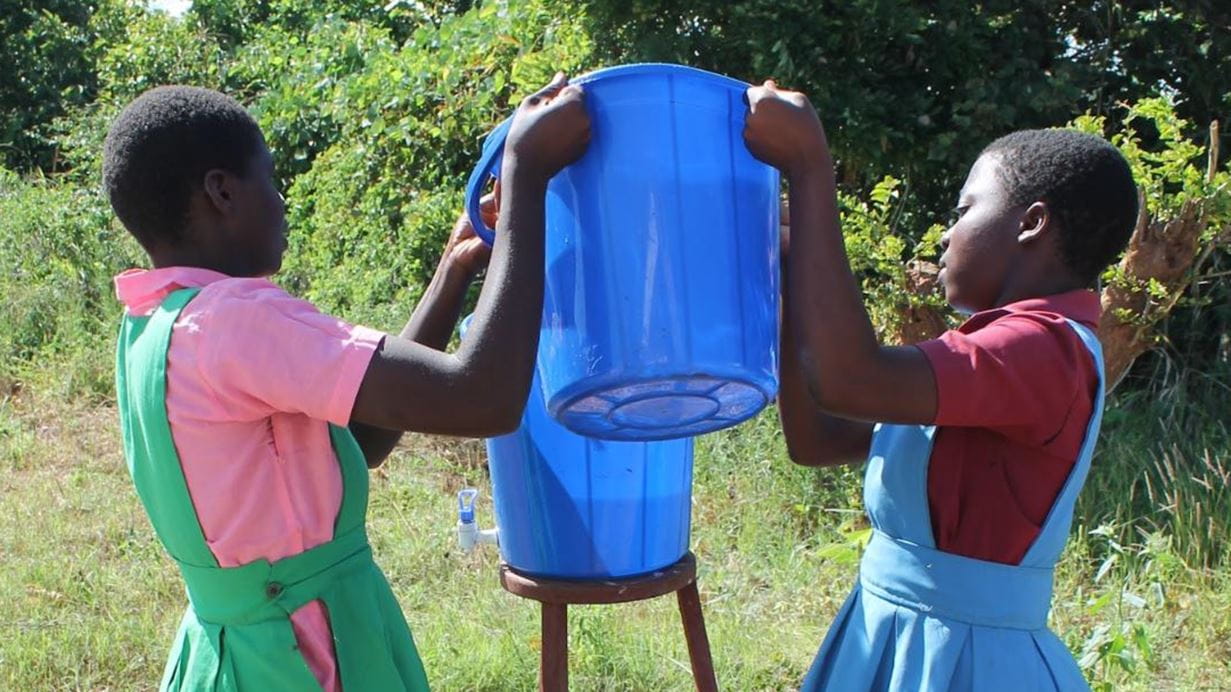
Two schoolgirls lifting a blue bucket, possibly filled with water, outdoors. Handwashing.

Two school girls fill up the hand washing station with water. Easy access to hygienic, safe toilet facilities help keep young people in education. Credit: Rachel Stevens/Tearfund

*What does WASH stand for?

WASH stands for water, sanitation and hygiene, and is the acronym commonly used to talk about access to: safe water for drinking and personal hygiene; decent, functional sanitation facilities; and the adoption of healthy hygiene behaviours which, when combined, help keep people safe from waterborne diseases that can be deadly, particularly to young children. Find out more here.

Pray with us

    • Give thanks for the impact this project has had in the Khankombe School and surrounding community.
    • Pray for Tearfund staff and partners and for church leaders around the world who tackle often deep-seated stigma, myths and taboos around menstruation, and who can help to ensure women and girls have a safe and hygienic place to manage their monthly periods.

Written by

Written by  Tarryn Pegna

Share this page

Share this page to spread the word and help support those in need.

Get our email updates

Learn about our work and stay in touch with Tearfund. Hear about our news, activities and appeals by email.

Sign up now - Get our email updates