
Skip to content Skip to cookie consent
Tearfund home
Donate

Politics can feel like a complex and divisive space.

As people who are passionate about justice, loving our neighbours in extreme poverty and protecting God’s creation, we know that our world needs to change. And yet, the systems that could influence this change feel overwhelming. Where do we even start?

Well, as Tearfund, we want to demystify some of this together.

In the UK, we have remarkable access to our MPs. That’s why we want you to feel encouraged and equipped to make the most of this access by speaking up for justice and an end to extreme poverty.
Who is my MP and what do they do?

Everyone in the UK has a locally-elected representative in Westminster – your Member of Parliament or MP for short. It is literally their job to represent you, whether you voted for them or not and whether you agree with them or not. Because of this responsibility, it’s so important that we speak up on issues that we care about so that our MPs know how to represent us well.

While your MP may have a wide portfolio, such as sitting on different committees and All-Party Parliamentary Groups (APPGs) or even holding a ministerial position in Cabinet, their primary elected role is to represent you.

You can find your MP by entering your postcode on the Parliament website.

‘It’s in the interest of your MP and their party to listen. When enough of their constituents raise the same issue, they will want to respond, engage, and might even change their mind.’
Jonah Taylor, Humanitarian Policy Advisor, Tearfund
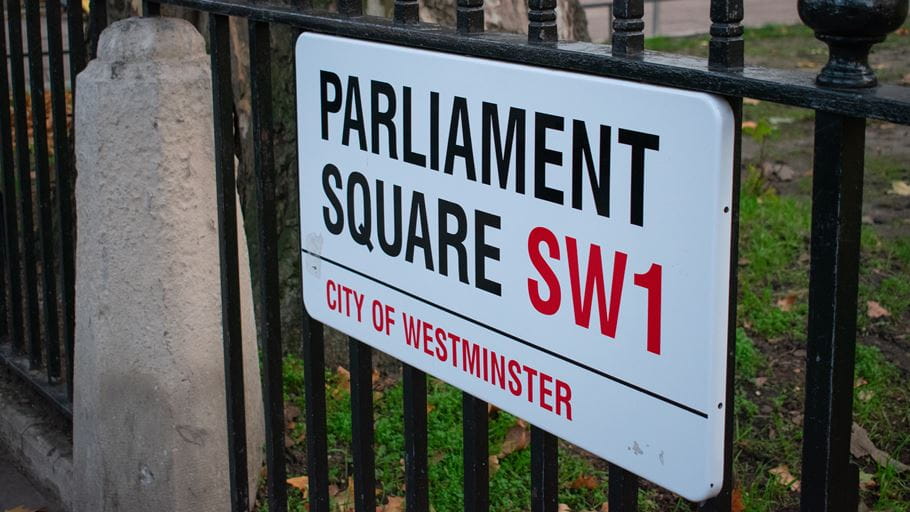
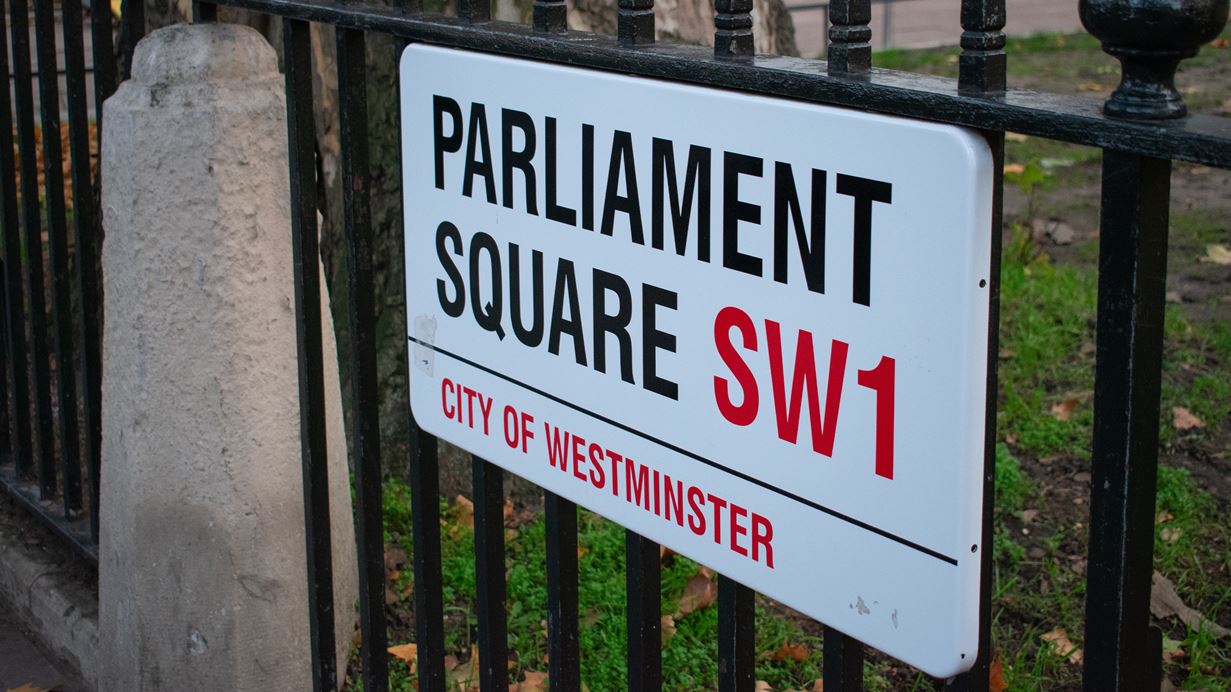
Close-up of a "Parliament Square SW1" street sign on a black metal fence in London.

Credit: Margaret Chandler/Tearfund

How could my MP speak up for justice?

There are so many parts to an MP’s role and multiple ways they can speak up or take a stand on an issue that we might not see locally or hear about in the media.

Some of these ways are:

  • Asking questions in Parliament – an MP can submit a written question or ask their question aloud for discussion in the House of Commons.
  • Bills (a proposal for a new law or to change an existing law) – an MP can bring their own bill to Parliament for consideration, or propose amendments to a bill that is being considered in Parliament.
  • Contacting officials – MPs can speak or write to government officials on behalf of constituents. Ministers are then expected to provide a ‘high quality’ reply in a timely manner.
  • Debates – MPs can raise the concerns of their constituents and share competing viewpoints on policy, new laws and issues affecting the UK and beyond.
  • Early Day Motions – an MP can encourage other MPs to sign an ‘EDM’ and submit it for debate to demonstrate the level of support an issue has.
  • Urgent questions – this is similar to raising a question, but the minister being questioned must come to the House of Commons on the same day to provide a statement and answer the MP’s questions.
  • Voting – MPs can vote on new laws, taxation, policies, budget and spending, and other national issues.

Find out more about what MPs do and how they can raise issues on the UK Parliament website.

‘Speak up and judge fairly; defend the rights of the poor and needy.’
Proverbs 31:9

If you haven’t seen your MP speak up on an issue you care about then don’t assume they don’t share your concern. It could be that they have spoken up privately, or that they’re unsure of the views of their constituents and therefore don’t feel confident speaking up without your support.

By contacting your MP, you may discover that they share your concern and are waiting for constituents like you to give them the mandate to speak up!

The potential cost of speaking up as an MP

MPs are expected to vote on a bill in line with what’s called the party ‘whip’. If they don’t, the consequences can be very serious. Defying the three-line whip means they risk being expelled from their party and must sit as an independent until the whip is restored. This risk can sometimes mean they don’t vote in line with their personal views and must be selective when choosing to vote against the party on an issue.

If your MP has recently voted against the party on an issue you feel strongly about, make sure to thank them and acknowledge the courage this will have taken.

What role do elected representatives play in Northern Ireland and Scotland?

As well as having an MP in Westminster, constituents in Northern Ireland are represented by Members of the Legislative Assembly (MLAs) and in Scotland by Members of the Scottish Parliament (MSPs).

The role of MLAs and MSPs is to represent you on ‘devolved matters’ such as:

  • agriculture and fisheries
  • education and training
  • environment
  • health and social services
  • housing
  • justice and policing
  • local government
  • transport

While carrying a different role to MPs, they still have a vital responsibility to make sure local policies and practices reflect the values and issues you care about.

What we do locally has impacts globally and so it’s important to build meaningful dialogue with MLAs and MSPs to show them we care about issues of poverty and injustice.

You can find out more about MLAs here and more about MSPs here.

How can I engage with a challenging political system or an MP with whom I don’t agree?

An encouraging recent survey found that 66 per cent of Tearfund campaigners follow current affairs ‘most of the time’ – that’s more than twice the national average!

Despite the temptation to switch off, by staying engaged through our prayers and actions we can speak hope and life into our political system. Often when we do this, God offers us a greater sense of compassion or a different perspective on a situation.

According to a government report on MP security, more than half of all candidates in the 2024 general election reported experiences such as ‘people following them or loitering around their home or office, threatening them, touching them against their will, damaging their offices or property or physically assaulting them.’

‘I urge, then, first of all, that petitions, prayers, intercession and thanksgiving be made for all people – for kings and all those in authority, that we may live peaceful and quiet lives in all godliness and holiness.’
1 Timothy 2:1-2

Regardless of whether we agree with the views of our MPs, it’s clear that political leadership is a challenging responsibility and potentially dangerous for politicians and their families. Our MPs deserve our appreciation for their service and our prayers for their safety.

At times, we may be disappointed by the behaviour and opinions of our MPs, but as Christians, we are called to choose the way of Jesus, loving people who we might see as our political enemies (Matthew 5:44). And on a practical level, whether we like it or not, this is the political system we have and the best thing we can do is to engage prayerfully, compassionately and faithfully to seek change.

Our God is in the business of changing hearts and minds, so we might be surprised by the results of our efforts…

Hand posting a letter into a red post box, part of the 'Last Collection Time' visible.

Credit: Tearfund

How should I contact my MP?

If you’re inspired to try ‘speaking the truth in love’ (Ephesians 4:15) to your MP, MSPs or MLAs, here are some top tips on how to do it:

  • Make it personal. Generic emails or letters will be read by your MP’s office, but something written personally by you will be more impactful and effective. Include part of your story or what inspired you to care about this issue.
  • Always include your name and address. This is essential for your MP to know that you are in their constituency, otherwise your letter or email might be dismissed.
  • Write a letter. While emails are easier to send, writing a physical letter demonstrates your strength of feeling by the time and care you’ve put in.
  • Be polite and respectful. Regardless of how you feel about your MP or whether you voted for them, every one of them is a person made in the image of God. They deserve kindness and may well be more open to your perspective if you start with gratitude for their public service.
  • Make it local. When writing about a global issue, try to find an example of how this affects their constituents as well. For example, addressing the climate crisis could also limit food price increases, flooding and other issues in your local area.
  • Be specific. Alongside demonstrating your passion for an issue, try to be clear about how you’d like your elected representative to respond, such as raising a question at a debate or voting for or against an upcoming bill.
  • Keep the conversation going. If your elected representative’s response is unsatisfactory then let them know and continue the dialogue with them, perhaps asking to meet in person. Even if they agree with you, follow up to see how they are taking action on the issue.
  • Do it together. If your friends, family or church share your passion then why not encourage them to write to their MP, MSPs or MLAs as well? The more letters they receive on an issue, the more empowered and obliged they will feel to speak up on it.

You can contact your MP directly by finding their email or office address on the Parliament website, or you can use one of our templates as a guide via the links below.

Get our Tearfund Action emails

Sign up to receive our Tearfund Action emails that will help you pray and act to tackle poverty and injustice.

Sign up now - Get our Tearfund Action emails