Skip to content Skip to cookie consent
Tearfund home
Donate

COP30: The sun sets on an Amazonian climate summit

A round-up of the UN climate summit in Brazil and how the Tearfund team spoke up for communities living in poverty.

Written by Hannah Eves, Climate Policy Advisor | 24 Nov 2025

The entrance to the COP30 Brazil pavilion

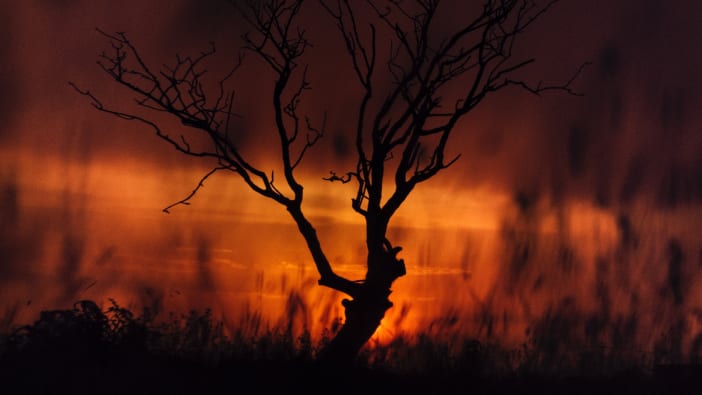
The sun sets on an Amazonian climate summit. Credit: Tearfund

The UN climate summit, COP30, drew to a close last Saturday after two eventful weeks hosted by Brazil in the rainforest city of Belém. If you’re just catching up, here’s why Tearfund was at COP30 in the first place.

But what happened at the summit? What were the main points of discussion within the negotiations? And how will this impact communities living in poverty?

We were in Brazil calling for wealthy governments to scale up climate finance for communities experiencing the worst impacts of the climate crisis. This money is critical to support people living in poverty to protect their homes and livelihoods from weather impacts such as floods, droughts and heatwaves, all made worse and more likely by rising global temperatures.

Why Belém?

Brazil decided to host the annual climate summit in the small city of Belém, rather than the much larger cities of Rio or Brasilia, which presented logistical challenges, such as very limited accommodation places to stay, before delegates even arrived in the city.

Yet, Brazil chose Belém for a reason – so the global community would be meeting in the shadow of the Amazon Rainforest, the lungs of the world.

After three years of climate summits in countries that crack down hard on protest, the hope was that Brazil would be the place for indigenous people to be heard. Sadly, the protests of indigenous people trying to access the blue zone, and forcibly being denied entry, have made headlines across the world.

It begs the question that we must always ask in these spaces – who gets a seat at the table?
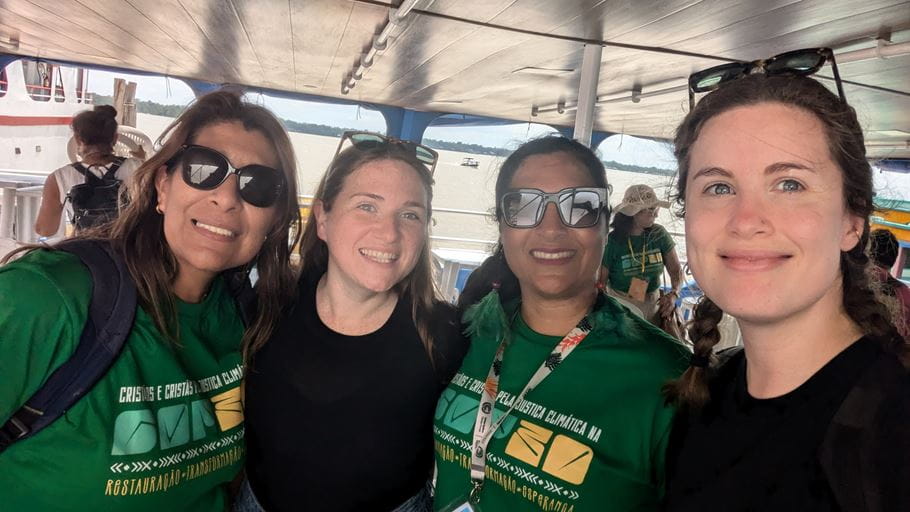
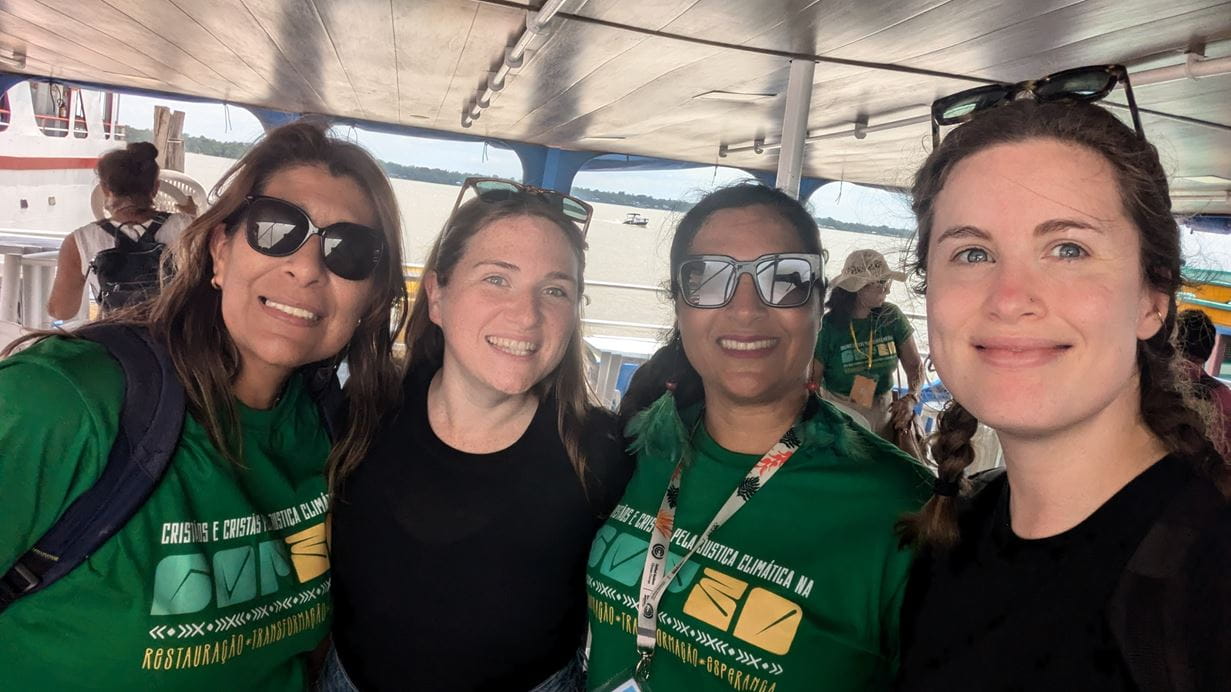
Four smiling women pose on a boat deck, some wearing climate justice t-shirts. River view behind.

Miriam Moreno, Laura Anderson, Simone Vieira and Hannah Eves played a vital role in Tearfund’s presence at COP30, pictured here at the boat parade. Credit: Tearfund

What was the outcome on climate finance?

The summit closed with the Global Mutirão decision text. Mutirão, is a word from Tupi Guarani, an indigenous language of Brazil. It translates as a group of people who work together to create something that benefits all. Brazil called for this summit to be the COP of truth, for it to be a true Mutirão.

The truth is that without delivering the finance to support communities experiencing climate impacts, there can be no practical outworking of the commitments agreed at these climate summits. At COP29, countries set a new climate finance goal of $300bn which fell far short of what communities needed. To try and address this gap, Brazil launched the Baku to Belém roadmap to push countries to scale up the finance to $1.3tn.

‘Without delivering the finance to support communities experiencing climate impacts, there can be no practical outworking of the commitments agreed at these climate summits.’

At COP30, however, we saw minimal progress to raise ambition on climate finance, but simply calls to implement already agreed upon targets. We did see a tripling of finance for adaptation – to support communities to adapt to the impacts of extreme weather events – but this is a drop in the bucket compared to what communities need.

What can we celebrate from COP30?

We can definitely celebrate the inclusion of a package to deliver on a ‘just transition’ in the final text. A welcome step in the right direction, it will help ensure that people working in and living alongside polluting industries are supported with sustainable, dignified jobs and livelihoods as we shift to a green economy. This was an issue that many organisations and community groups campaigned hard on during the two weeks, so it was significant to see it included in the final text.

Yet, the roadmap to transition away from fossil fuels, which emerged as a strong possibility in the second week of negotiations, was omitted from the final text. Without a concrete plan to transition away from fossil fuels, we cannot hope to avoid worsening climate catastrophe and deliver justice for communities living with the impacts of climate change. As such, the issue of fossil fuels remains the dinosaur in the room at every climate summit.

‘Mutirão translates as a group of people who work together to create something that benefits all – that was Brazil’s aim for this COP.’

Brazil has committed to working to achieve a roadmap to transition away from fossil fuels with their remaining time as COP President (between now and the beginning of COP31 when the presidency transfers to Australia, although hosted in Türkiye). There will also be a conference hosted in Colombia next year to further discuss the issue of fossil fuels.

Finally, there was not much to report apart from a Belém Mission 1.5 reporting to COP31 on closing the ambition gap between what countries committed to over the last year in their new round of national climate plans and what is needed to keep global average temperature rises at 1.5 degrees or below (what scientists agree is a safe global temperature).

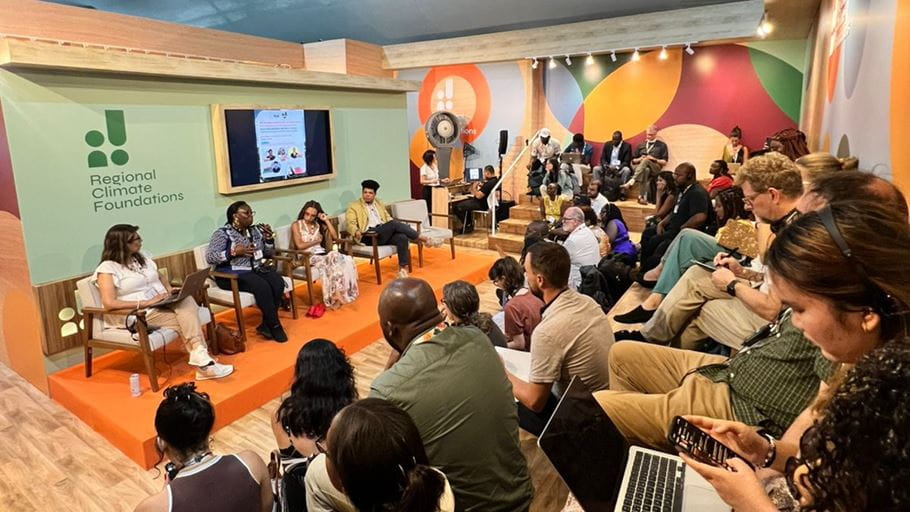
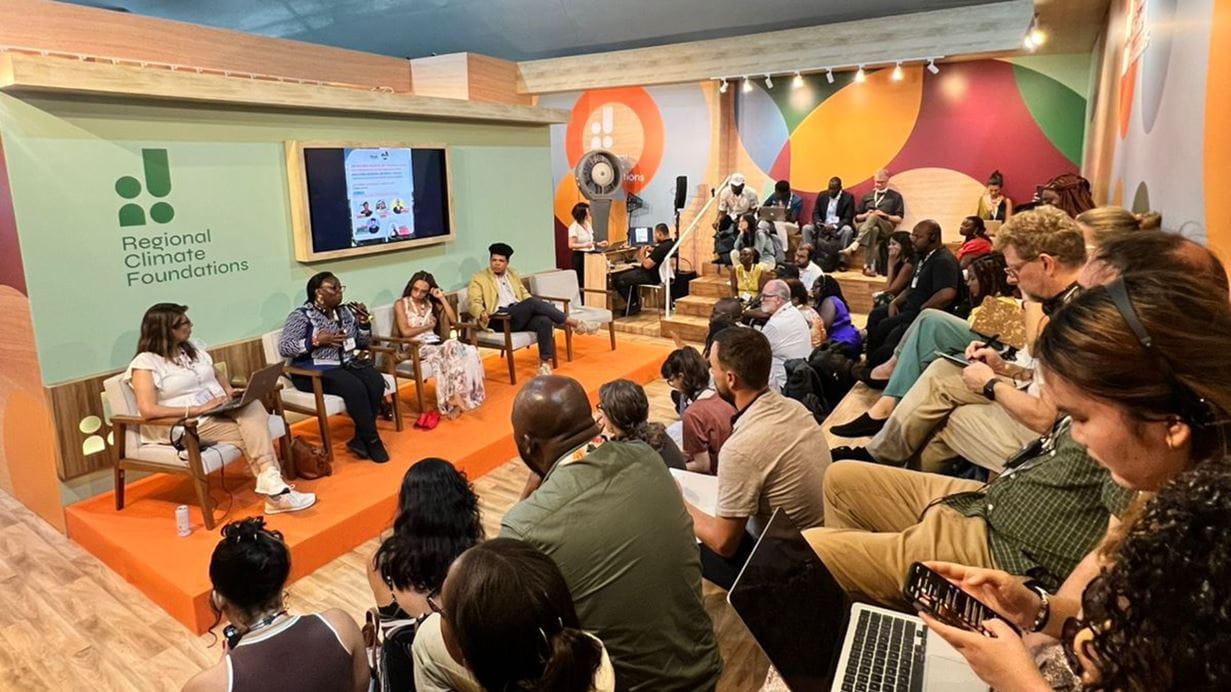
Panel discussion at Regional Climate Foundations event, audience in foreground taking notes.

Mutirão translates as a group of people who work together to create something that benefits all – that was Brazil’s aim for this COP. Credit: Tearfund

What was the Tearfund team doing during COP30?

Tearfund’s Latin American team was incredibly busy, both in the lead up to and over the two weeks of the talks. Led by Miriam Moreno and Simone Vieira, they brought young activists into the conference space to speak to country representatives and communicate the challenges their communities are facing because of climate change.

Throughout the negotiations, the team delivered an ecumenical call to action to country delegates outlining key issues such as just transition, climate finance and supporting communities to adapt to climate change. During the second week, Miriam, Tearfund’s LATAM Youth Coordinator, spoke in a panel discussion at COP30 about how to engage faith communities in the fight for climate justice.

Reflecting on the summit, Miriam said: ‘Every day we see the devastating impact of climate change on communities across Latin America. We were encouraged by how faith communities came together from across Latin America to bring a prophetic voice for climate justice into COP30. We came to stand in solidarity with the people and communities most affected as we “mourn with those who mourn” (Romans 12:15).’

From the UK, Tearfund Ambassador Laura Anderson (nee Young) and Climate Policy Advisor, Hannah Eves, joined the team to follow the negotiations, lobby policy makers and communicate the importance of the conference back to the UK. Laura had some great opportunities to share analysis and stories from the communities Tearfund works alongside with mainstream media outlets such as BBC’s Radio 4, 5 Live, Times Radio, as well as Christian radio stations including Premier Christian Radio, Church Times, TWR and UCB.

Faith groups were very present both inside and outside of COP30. Tapiri, an inter-religious and ecumenical coalition, met as part of the People’s Summit – an alternative grassroots summit taking place outside of the formal UN summit – and discussed issues of climate justice and indigenous rights. The Tearfund team had the privilege of joining the boat parade along the Amazon River on board the Brazilian Bible Society’s boat, marking the opening of the People’s Summit.

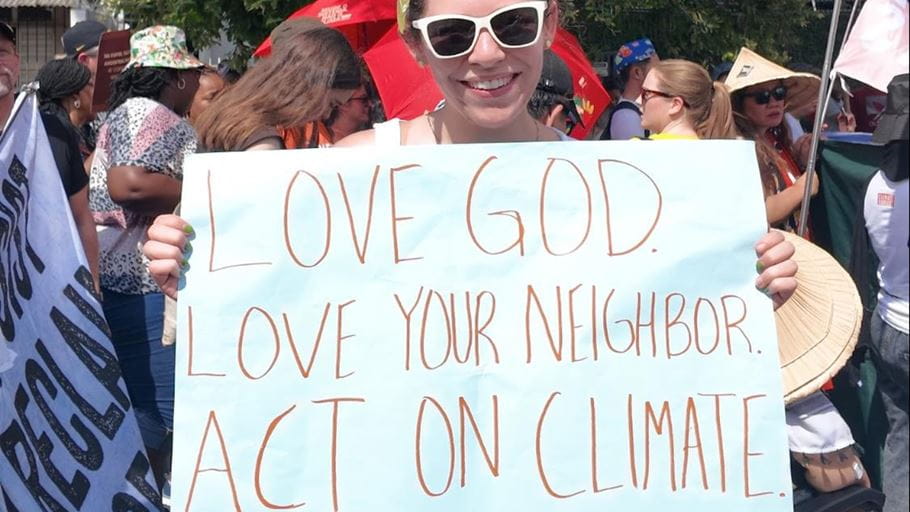
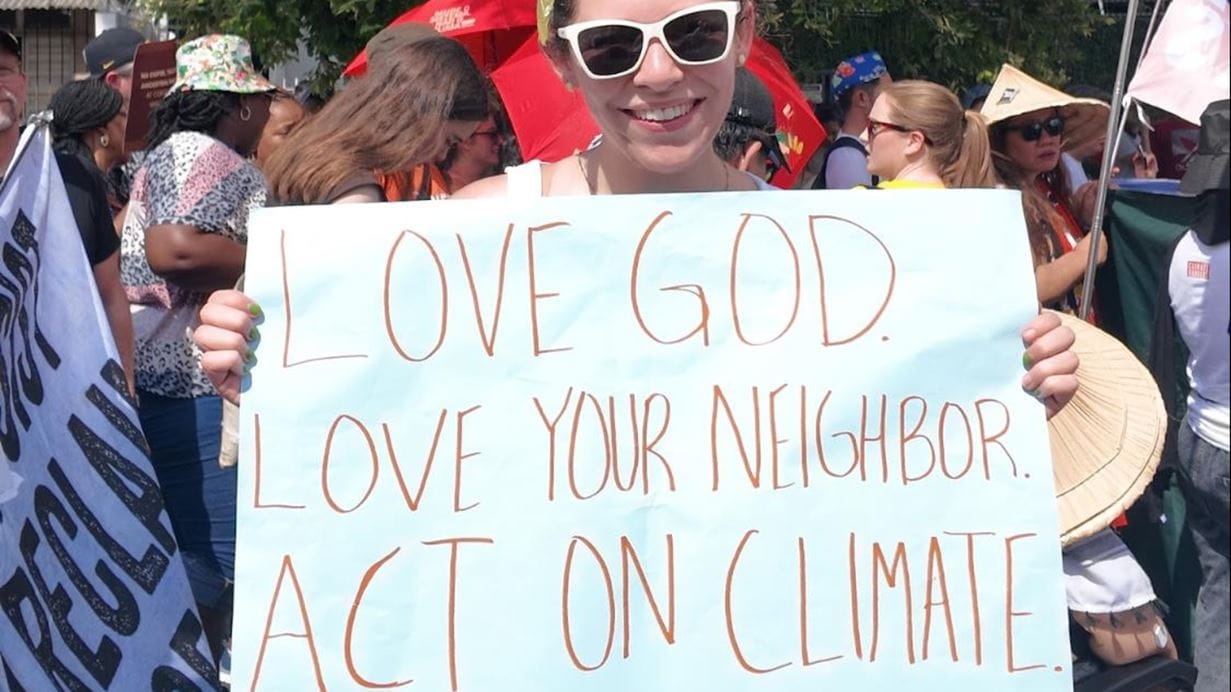
Smiling woman at a climate rally holds sign reading "Love God. Love Your Neighbor. Act on Climate."

A sign that sums up Tearfund’s approach to climate at the protest on the middle weekend of COP30 in Brazil. Credit: Tearfund

What’s next for COP?

The next climate summit will be held in Türkiye, but hosted by Australia and with a pre-COP event in the Pacific Islands. This complicated outcome is the result of a long negotiation process between the two countries during COP30. They even announced that COP32 will be held in Ethiopia before announcing the presidency of COP31. This may make it more difficult for representatives from the Pacific Island nations to participate meaningfully in the conference.

Many issues on the table at COP30 will return for further discussion at COP31, such as climate finance and fossil fuel transitions. We must pray that countries will come to Türkiye with greater ambition for the level of commitments needed to tackle the climate crisis and support communities suffering its worst impacts.

Until COP31, however, there is still plenty that we will be doing as Tearfund to speak up for climate justice, and many ways that you can get involved.

‘Every day we see the devastating impact of climate change on communities across Latin America. We were encouraged by how faith communities came together...to bring a prophetic voice for climate justice into COP30. We came to stand in solidarity with the people and communities most affected as we “mourn with those who mourn” (Romans 12:15).’
Miriam Morena

The fight for climate justice continues

The pursuit of climate justice goes beyond any one climate summit, and we know that no one conference can solve this crisis. Instead, we continue to show up every day and demand better from our leaders for those experiencing poverty and climate breakdown. We will continue to hold leaders to account on delivering climate finance and all that was promised, and all that was not, as we prepare for COP31 next year.

While COP is an annual event, the reality of climate change is a daily crisis for communities living in extreme poverty. We continue to fight for and with them.

As Miriam Moreno put it, ‘Communities living with the consequences of climate breakdown, particularly Indigenous peoples and local communities, must be able to participate in climate decisions in an equitable and meaningful way. Their voices, rich in ancestral wisdom, justice and dignity, also reflect God’s call to care for creation and protect people who are made most vulnerable by climate change.’

You can watch Tearfund’s ambassador Laura Anderson interview the UK Secretary of State Ed Miliband on how the UK is responding to the climate crisis here on Instagram.

If this is an issue that you’re passionate about, make sure you’re signed up for Tearfund Action to hear about an exciting way to show your MP you care this Christmas.

How to pray

    • Pray for representatives from indigenous communities and communities living in extreme poverty, that they will leave COP30 feeling that their voices were heard and that they will see action as a result of their advocacy.
    • Pray for churches and faith leaders to continue to be bold in lifting a prophetic voice in support of climate justice.
    • Pray for leaders and delegations from wealthy nations to become more ambitious in delivering the vitally-needed climate finance to support communities to adapt to a crisis they didn’t cause.

Written by

Written by  Hannah Eves, Climate Policy Advisor

Climate Policy Advisor

Share this page

Share this page to spread the word and help support those in need.

Get our email updates

Learn about our work and stay in touch with Tearfund. Hear about our news, activities and appeals by email.

Sign up now - Get our email updates