
Wolaita sits within Ethiopia’s southern highlands, a place of striking beauty. Red volcanic soil stretches across the landscape, broken up by clusters of false banana trees and small plots of maize and sweet potato. Yet the beauty of the landscape itself can be deceptive, for the soil beneath the surface tells a different story. Life here is shaped not by how the land looks, but by the rain that falls on it, or doesn’t. Rainfall is increasingly unpredictable. Seasons that once followed a familiar pattern now arrive late, end early, or sometimes fail altogether. When the rains falter, the lush green hills quickly lose their promise.
Where love leads, life grows
Aylech’s story of how conservation agriculture has turned her barren farming into a harvest of community empowerment.
Written by Lisa Skinner | 06 May 2026
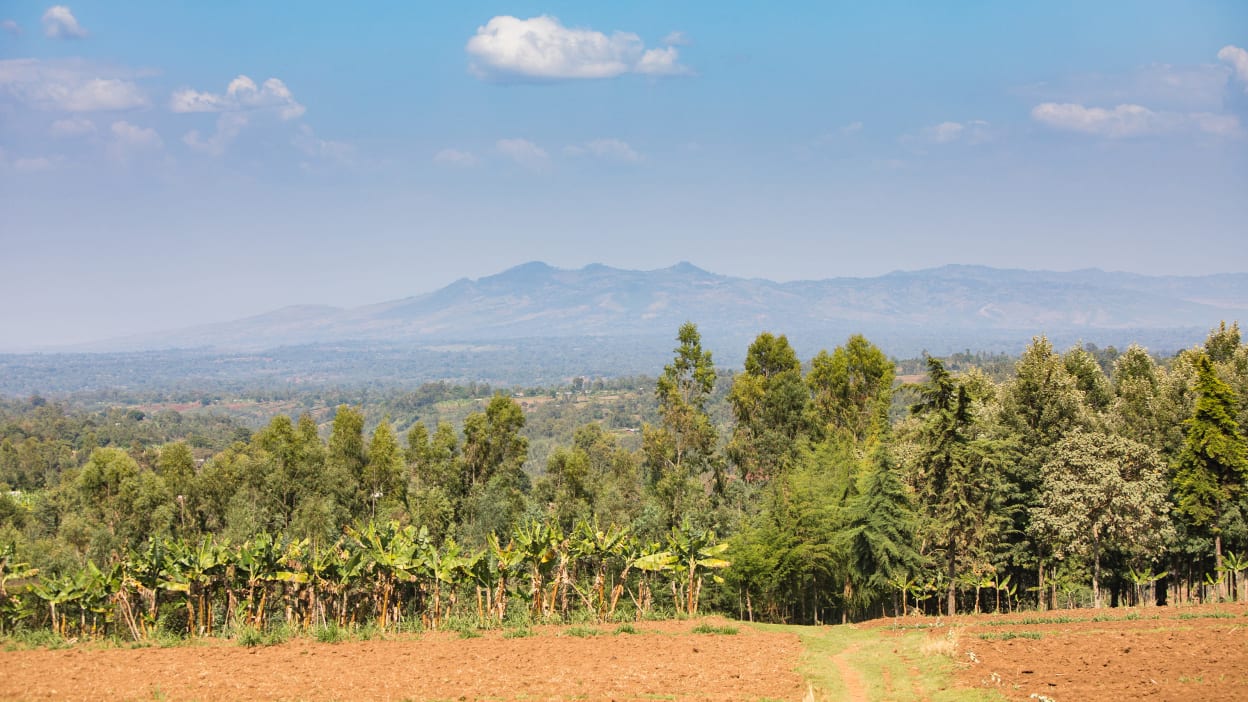
The striking landscape of the Ethiopian Highlands in Wolaita, with its lush green false banana plants and red volcanic soil. Credit: Chris Nelson/Tearfund
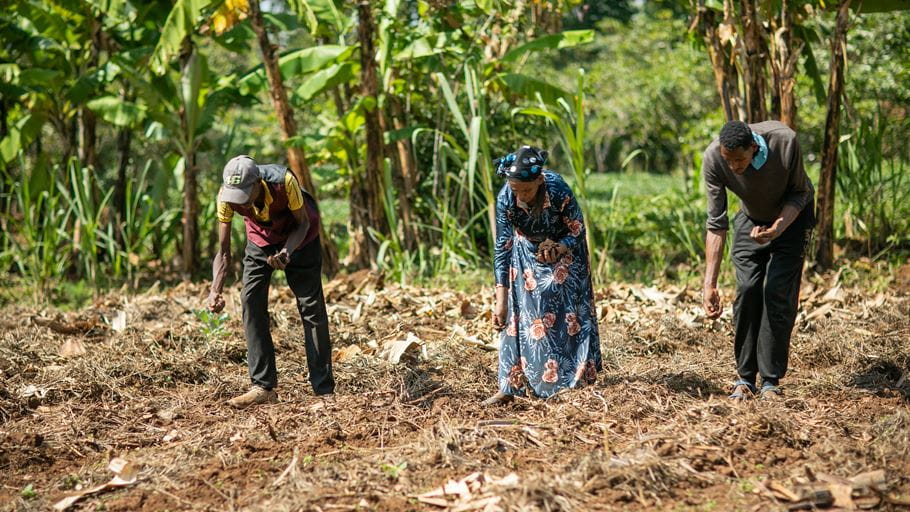
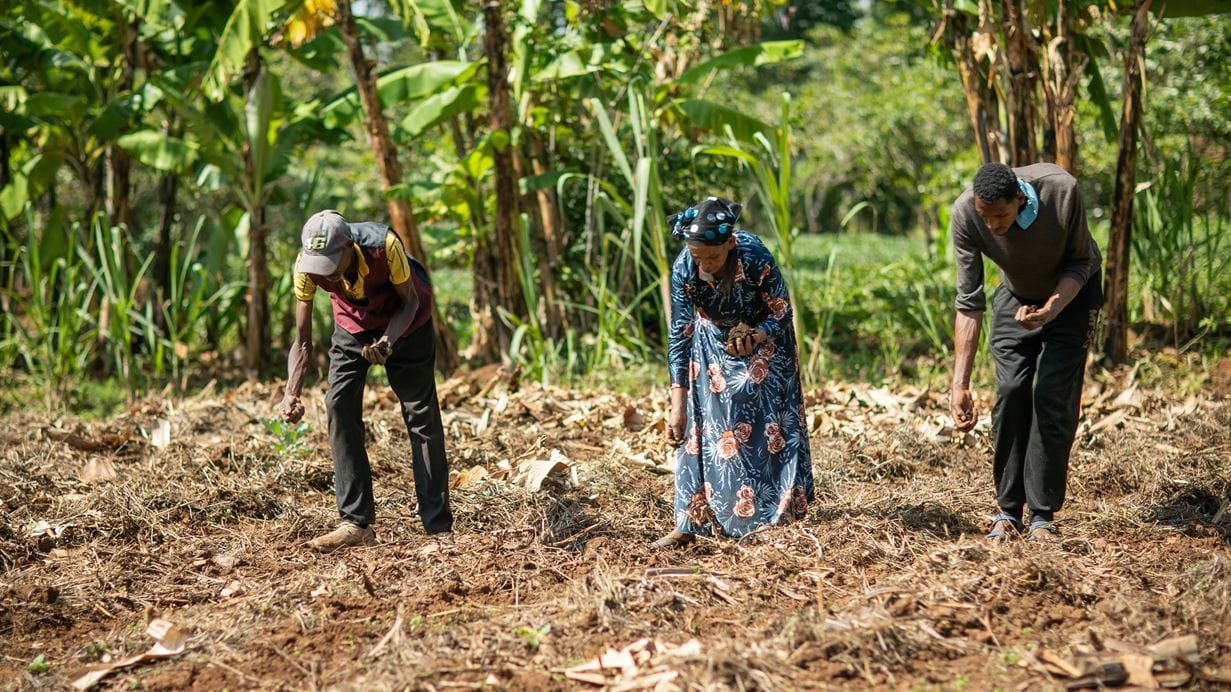
Subsistence farmers in the Southern lowlands of Ethiopia have been struggling with crop yields in recent years, due to the inconsistent and unreliable rainfall. Credit: Chris Nelson/Tearfund
A struggle for subsistence
For subsistence farmers like Aylech, this is not an abstract problem, it is immediate and personal. Harvests that should sustain her family fail to provide. The same land that appears rich and fertile from a distance can yield just enough to survive, and sometimes not even that, forcing families to seek food and often employment elsewhere.
The land holds potential, but not certainty. Aylech grows maize, a staple food for her family. But for years, her crops were vulnerable to disease, and her yields were painfully low. She struggled to produce enough to feed her household, and rising costs of chemical fertilisers only added to the pressure.
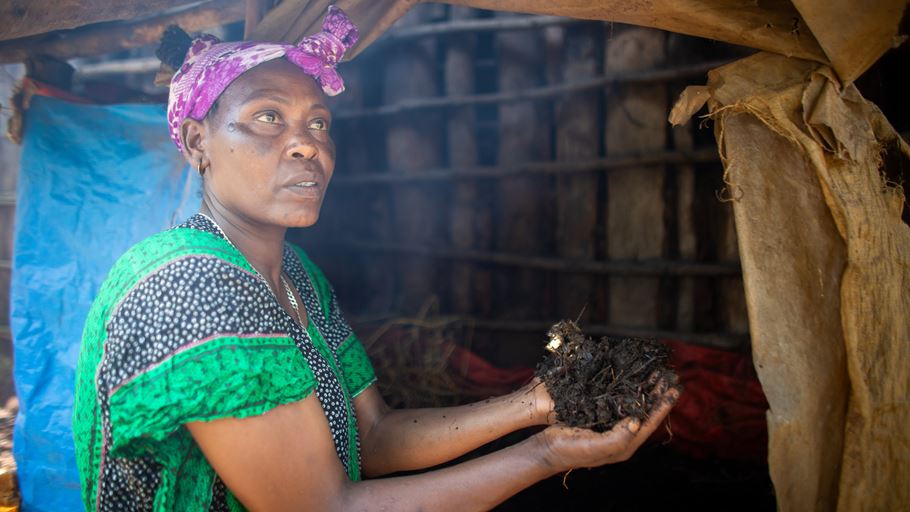
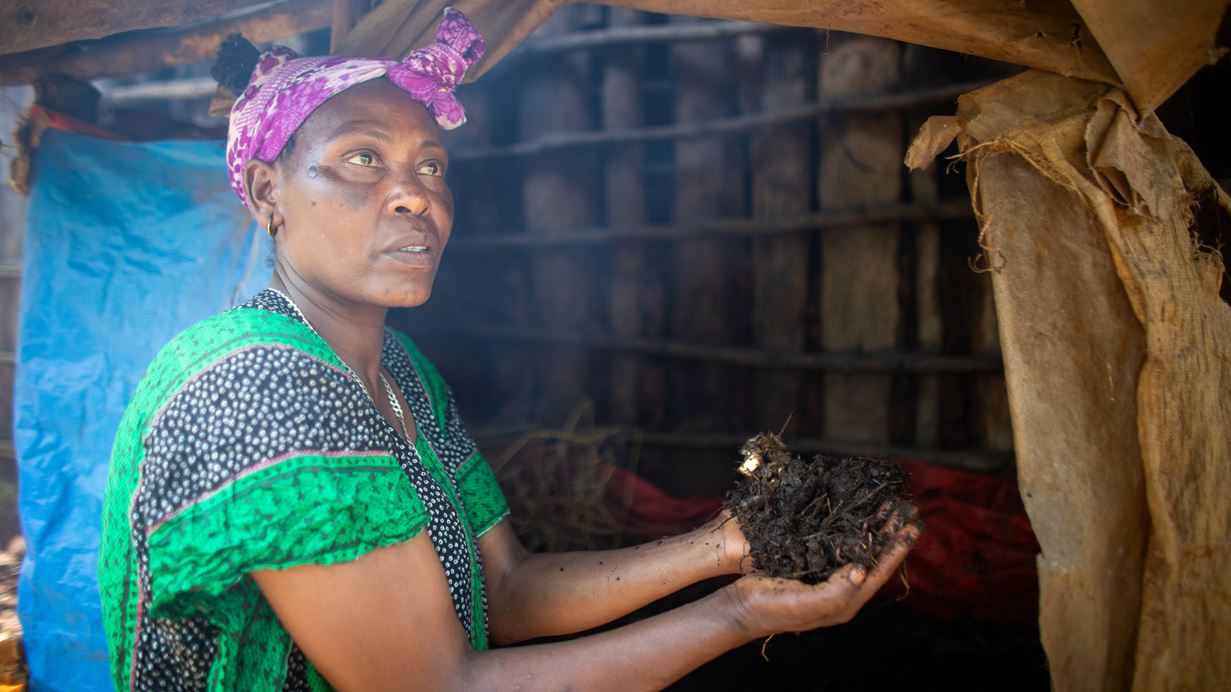
Aylech is a subsistence farmer in Wolaita, due to the lack of rainfall her crop yield was not sufficient for the survival of her family. Credit: Chris Nelson/Tearfund
Sowing seeds of innovation
Tearfund goes where love leads, following Christ where the need is greatest. It is love that has led them to partner with the Terapeza Development Association (TDA) in Ethiopia. The TDA has stepped into this reality, coming alongside Aylech to give her training in conservation agriculture. She learned how to use mulch to retain moisture in her soil. She was also introduced to sustainable organic farming methods and began developing a kitchen garden, growing carrots, kale, cabbage and more. Alongside this, she implemented a vermiculture system, using worms to break down organic waste into rich compost and a liquid fertiliser known as ‘vermi tea’. These simple, sustainable practices began to transform her land.
The results were unmistakeable. As Aylech explains, ‘The colour and the texture of my crops could be seen to be different. The maize used to appear yellowish in colour, now it is green and each stalk has three or four maize on it as opposed to one. My plot used to yield 75kg of taro (a root crop), now I am getting 150kg.’
In a country like Ethiopia, where food security means everything, this change was profound. But it’s not just about growing more food, it’s about growing better food. Aylech now intercrops with haricot beans and pumpkins, bringing greater variety and nutrition to her family’s diet.
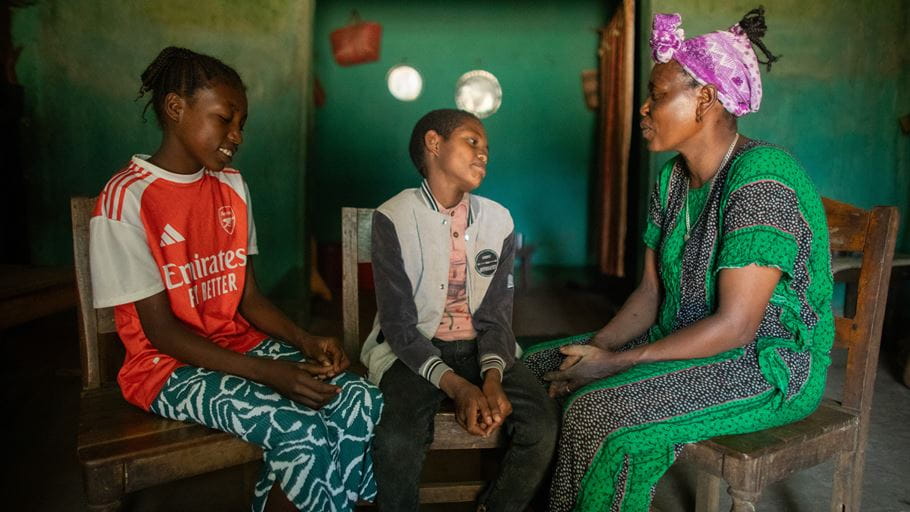
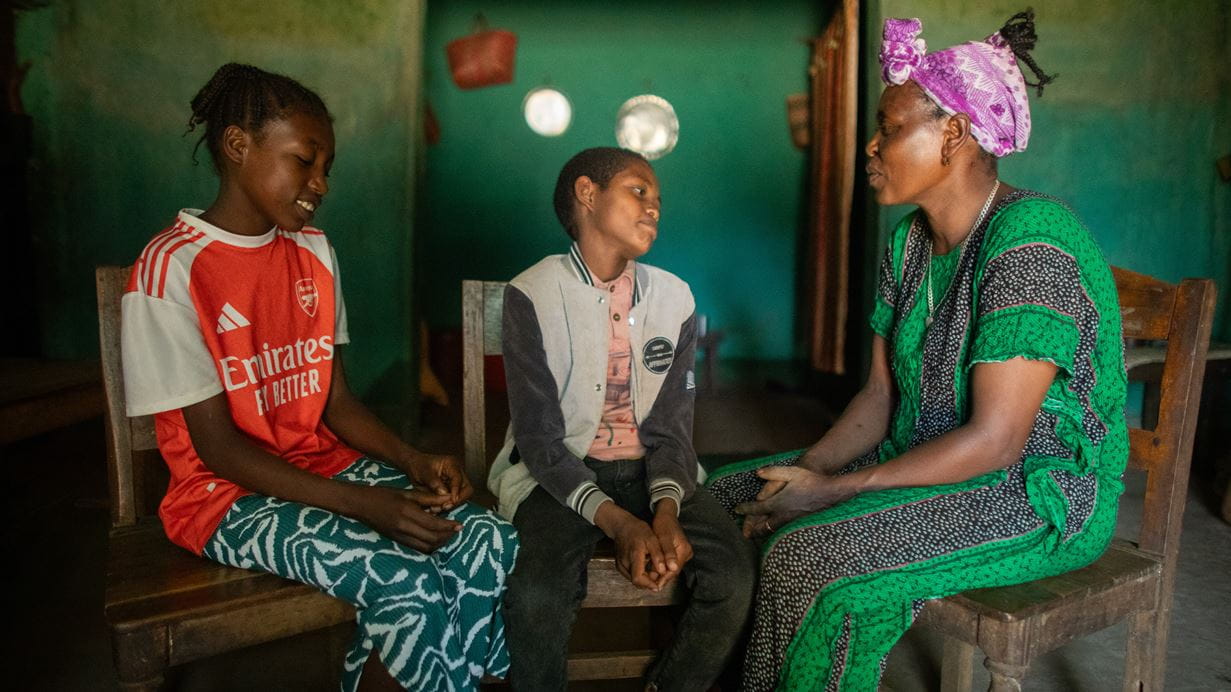
Aylech was not only empowered through using conservation agriculture and vermiculture, in turn she has been able to empower her children. Credit: Chris Nelson/Tearfund
The power of the Self-help group
Aylech is a member of a local self-help group (SHG) of 20 women, which has also helped to enhance her farming practices. Together, the women share skills, encourage one another and save money collectively, making small loans available to support one another in their farming and business efforts. Although this group of women had always lived in the same neighbourhood, Aylech says that it was only through the SHG that they began to form relationships. And from this place of support, something even more powerful has grown. Aylech is no longer just providing for her family, she is helping them build their own futures. Using the surplus from her harvest, Aylech has been able to invest in livestock for her three teenage children, helping them to generate their own income.
‘My children used to always ask me for money,’ she says. ‘Now they are self-sufficient. If they want money they earn it for themselves. They no longer come to me for money.’
It’s a quiet but significant shift, moving from dependence to independence, from scarcity to possibility. And it doesn’t stop there. For Aylech, this transformation has deepened her faith. She now has the ability to give to others in her local community and more to her local church. What began as provision has overflowed into generosity.
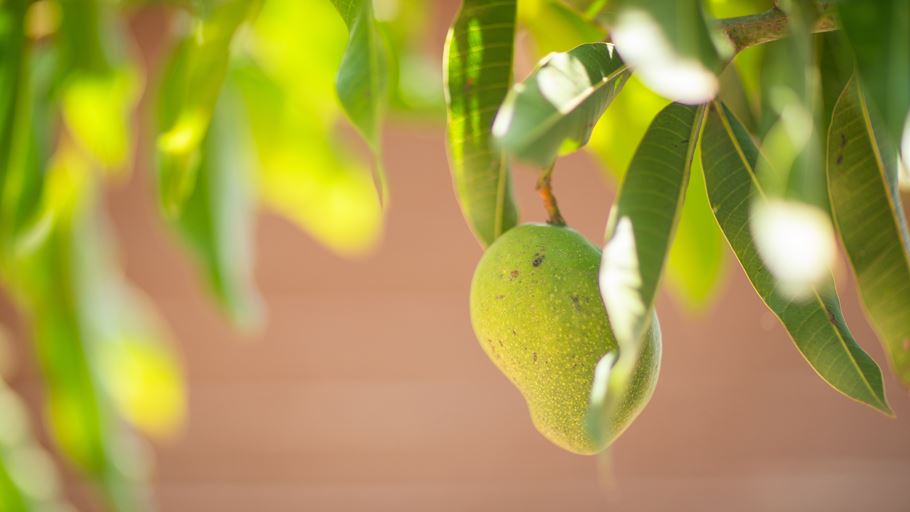
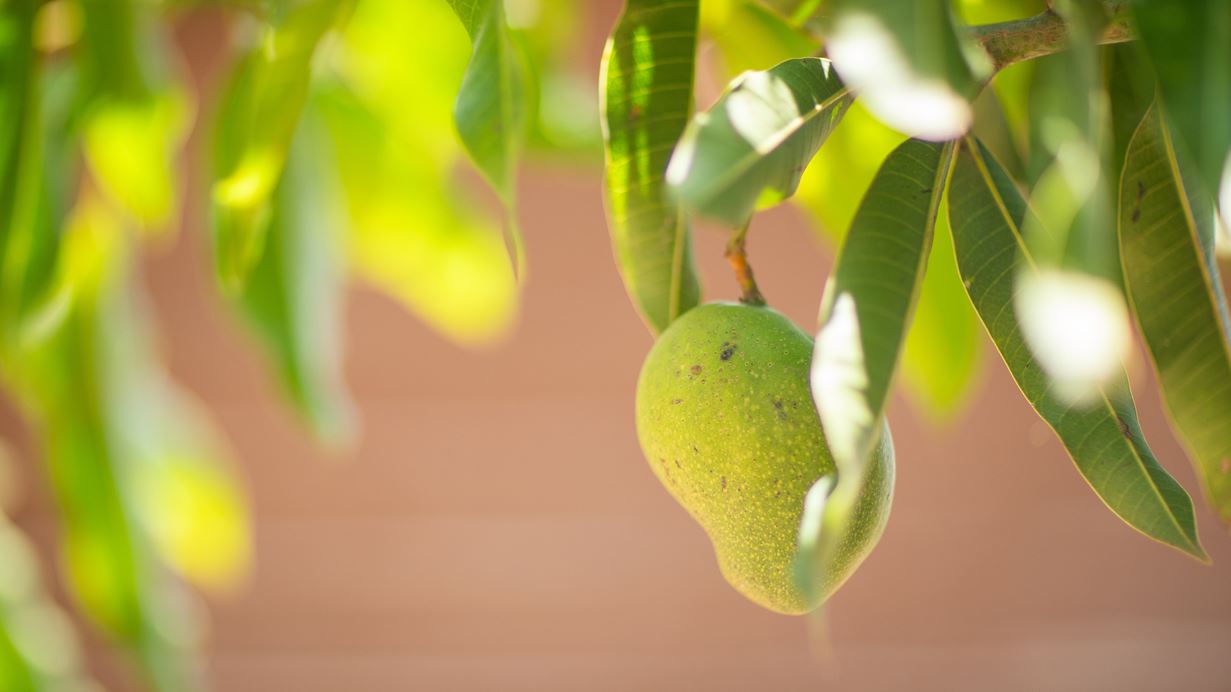
Aylech’s crops now appear better, bigger and tastier since using the vermicompost in her soil. Credit: Chris Nelson/Tearfund
Faith and transformation
Aylech talks about how the transformation of her farmland has increased her faith in God and her relationships with other Christians. Members of her local church committee play a vital role, through the Church and Community Transformation (CCT) work carried out through TDA. Her church leaders regularly visit and support Aylech in her farming. At times they gather farmers together to provide training on key development issues. There is a shared desire to care for the whole person and the whole community, demonstrating faith and practical action. This is how love leads.
As we talk about the future, what stands out most is Aylech’s heart for others. She doesn’t want to keep this transformation to herself. She wants to spread the word and positively influence others in her community who aren’t yet using conservation agriculture and vermiculture. ‘Living this way myself and helping others is my greatest hope,’ she says.
She wants to show others how transformational these practices have been: ‘Why don’t you see my yield? Why don’t you see my healthy soil? Why don’t you see the support I’ve enjoyed from being involved in a Self-Help Group? Why don’t you see the changes in my life? Let my life be a testimony to you. I will keep advising people so that they too can flourish. They too can ensure food security in a rain deprived community.’
Her vision is simple but powerful: ‘People shouldn’t limit themselves to one activity but should engage in all farming activities and businesses so that they can fulfil whatever they need. I want to see my community prosper for good.’
How can we pray?
As I prepare to leave her farm I ask Aylech one final question - what can we pray for? Her answer was simple: ‘Pray for the rainfall in Ethiopia, for it is God who blesses the soil.’
Perhaps that is where the story ultimately rests, not in just techniques or training, but in faith, perseverance, and a God who sees, provides, and multiplies what is placed in His hands.
Pray for Ethiopia:
- Pray for consistent, timely rains in Wolaita and the Ethiopian highlands, that God would ‘bless the soil’ and provide the water necessary for crops to flourish.
- Give thanks for the success of conservation agriculture and vermiculture in the region. May these techniques spread to restore land health across rural communities.
- Pray that Aylech’s success would inspire her neighbours to adopt sustainable methods.
- Ask for wisdom and deep relationships among the 20 women in Aylech’s Self-Help Group, as together they move from scarcity to independence.
- Pray that the TDA and local church leaders are strengthened to care for the whole person, addressing both physical food security and spiritual growth in Christ.
Written by
Written by Lisa Skinner
Similarly Tagged Content
Related Stories
-
Prayers for World Humanitarian Day

How to pray for the people and places around the world in need of humanitarian aid and for the people who bring it.
By Tarryn Pegna | 16 August 2024
-

World Humanitarian Day: meet (and pray for) humanitarians
We spoke to some of our staff and partner staff around the world, finding out what they do, and why they do it.
By Tarryn Pegna | 18 August 2025
-

The better life Adama hopes for her grandchildren in CAR
Like many others around the world right now, Adama’s family was forced to flee their home to find safety from conflict.
By Tarryn Pegna | 25 October 2024


Share this page
Share this page to spread the word and help support those in need.

Get our email updates
Learn about our work and stay in touch with Tearfund. Hear about our news, activities and appeals by email.
Sign up now - Get our email updates