Skip to content Skip to cookie consent
Tearfund home
Donate

Coping with much more than a heatwave: a (cool) Iraq story

Iraq is one of the places already most affected by climate change. Going to school when it’s really hot is really hard.

Written by Tarryn Pegna | 10 Jul 2026

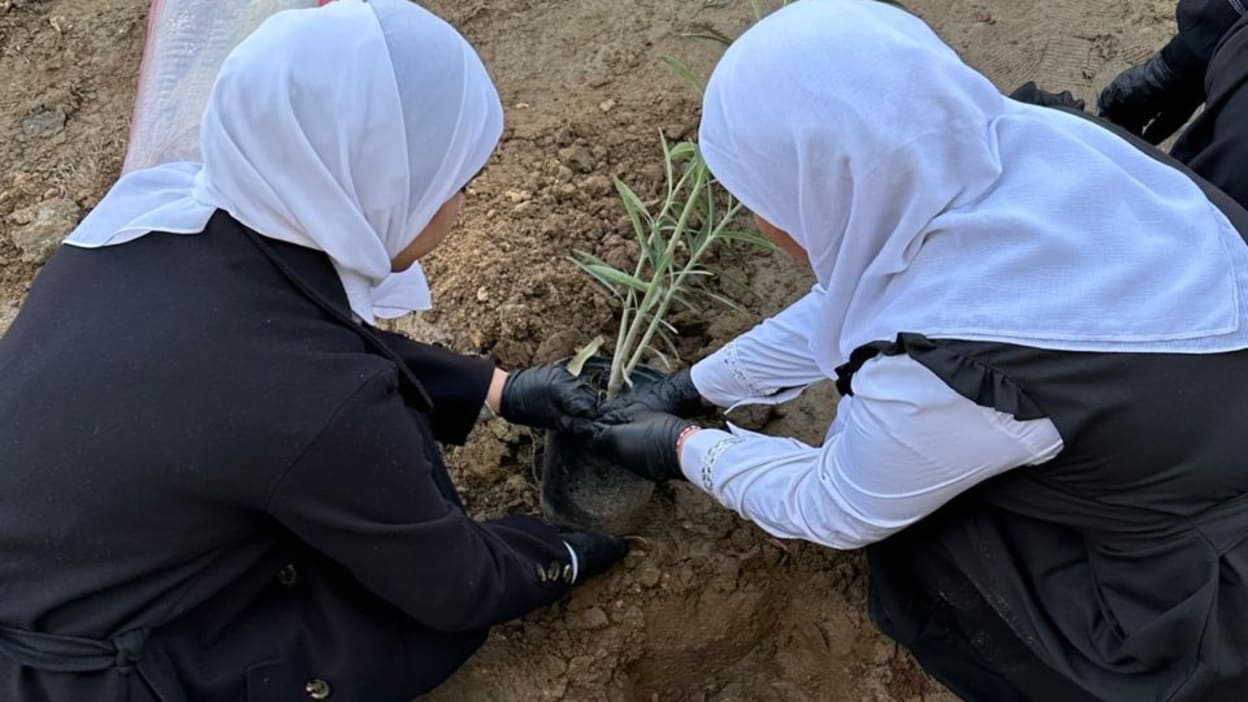
Two girls wearing headscarves and black gloves carefully plant a small green plant into the soil.

Two students at a school in Iraq take part in a tree planting day after the principal of their school took part in training from Tearfund and our local partner. Credit: Tearfund

It’s really hard to concentrate when it’s hot! An opinion poll this week reported that two in three people in the UK lost sleep in the heatwave last month, and more than 20 per cent had felt ill because of the sustained higher temperatures.

Scientists link increased heat to lower work productivity and reduced school test scores – although we probably didn’t need a scientist to tell us that. We could perhaps also add shorter tempers, greater irritability and creeping lethargy to the impacts we might have expected them to include.

Amal: school principal

For Amal, principal of a secondary school in Iraq though, the type of upper 30s temperatures that has recently had UK schools canning their uniforms or closing altogether as students (and teachers) struggled to cope, are amongst the cooler conditions she and her students have to deal with.

Where she lives, April and October see average temperatures in their mid thirties, and from May to September the thermometer spends most of its time in the mid to upper forties.

The impacts of the climate crisis have already worsened the extreme heat in Iraq, and the situation looks likely to continue to escalate. Basra now sometimes has temperatures exceeding 50 degrees!

In places like Amal’s school, the practical effects of the worsening heat are felt on a daily basis.

‘Education offers girls and whole communities a better chance at escaping poverty. Without schooling, the future choices and opportunities for women and girls remain limited.’

Championing education for girls

Amal grew up near the school she now leads. She and her husband have a son, and she herself grew up in a large family, surrounded by brothers, which, she says, taught her resilience and determination.

She tells us that her father was very supportive of her education, and it was this that instilled a great passion in her for seeing girls in particular to have good learning opportunities.

Before starting as a teaching assistant, then becoming a teacher and eventually moving on to be head of the school, Amal started her career in media – a role which often has a lot to do with bringing to light issues that need attention. And she has brought these skills to her school role.

Giving girls a future

Although it is one of the oldest and largest girls’ schools in the area, Amal’s school struggled with a lack of investment.

As it is, girls in Iraq face some significant hurdles to accessing education. Though improvements are being made at a government level, poverty, traditional views on whether or not girls should be educated, early marriage and safety concerns are all factors that still keep many girls out of school, resulting in illiteracy rates that are double those of boys.

Many girls drop out of school, particularly in more rural and conflict-affected areas.

Education offers girls and whole communities a better chance at escaping poverty. Without schooling, the future choices and opportunities for women and girls remain limited.

And when it’s already so difficult for girls to stay in education, having an overheated and unbearably uncomfortable school environment makes it even harder to convince girls to overcome all the other challenges they are facing to pursue an education.

Overheating, underfunding

At Amal’s school, the lack of funding had resulted in unreliable electricity, which meant that lots of things – including the air conditioning – often didn’t work at all, and damaged and deteriorating floors made things unsafe, unpleasant and uncomfortable – far from an ideal learning environment.

There was no greenery or shaded outdoor spaces around the school, giving the girls nowhere to escape from the extreme heat to study, rest or socialise during the school day. It made the school feel harsh and uninviting and didn’t help with concentration.

Amal was desperately trying to find ways to protect her students’ education.

She repeatedly planted seedlings, but younger pupils from nearby primary schools kept uprooting them.

And she was struggling to manage the heavy workload of all her responsibilities as a principal along with trying to improve the school’s physical environment. She says she regularly worked seven days a week and she was exhausted and discouraged. On the other hand, she also felt guilty that she was not spending enough time with her own family.

What Amal really needed, she says, was some practical and moral support.

And this is exactly what Tearfund’s local partner was able to give her.

‘I’m happy to see the classrooms freshly painted, the air conditioners working again, and the school yard cleaner and greener. The atmosphere has completely changed!’
Amal, School principal, Iraq

Tearfund and Women’s Empowerment Organisation

Tearfund and Women’s Empowerment Organisation (WEO) provided Amal and other school leaders with training to help supplement and build their confidence and skills in management and to look at new, effective ways to improve their school environment.

Supporting women like Amal, who are in positions like hers where they have influence and power to make a difference, this sort of training can help bring changes which impact the futures of whole communities.

Amal says the training was different from any she had attended before because it emphasised discussion, dialogue and active participation. This, she says, supplied both practical tools and also moral support, which made her feel encouraged, motivated and optimistic.

‘I felt I had a guide and a supporter who provided moral energy and practical advice,’ she says. ‘I not only learned to participate, but also to involve my students and staff in the work for school.’

The most beautiful school

Amal and her school have already completed several projects inspired by the training. These have included raising funds, painting classrooms, planning small green areas with shrubs to provide shade, and organising competitions that encourage students and staff to take responsibility together for maintaining a clean and welcoming school environment.

One example of this is the school-wide competition she introduced for The Most Beautiful Classroom. This, she says, has helped shift the culture within the school from one where each individual just does only what they have to, to one of working together with shared ownership, teamwork and pride in their school.

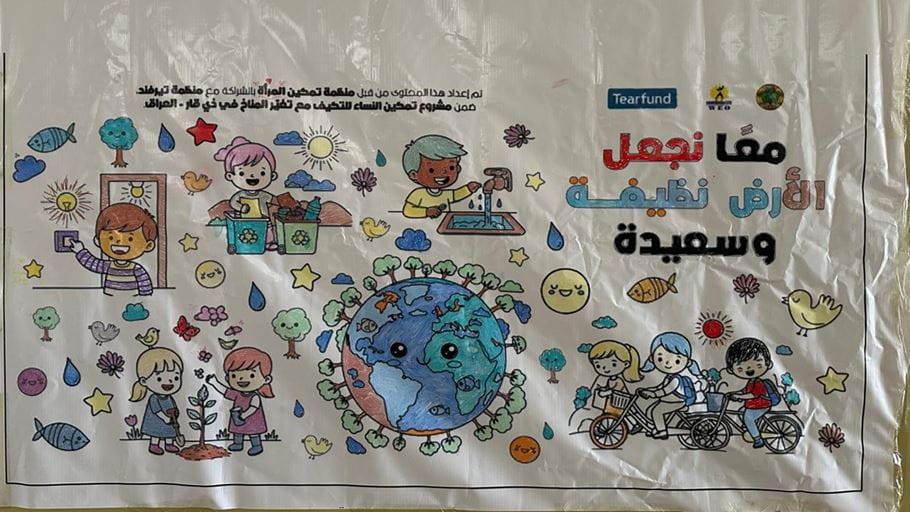
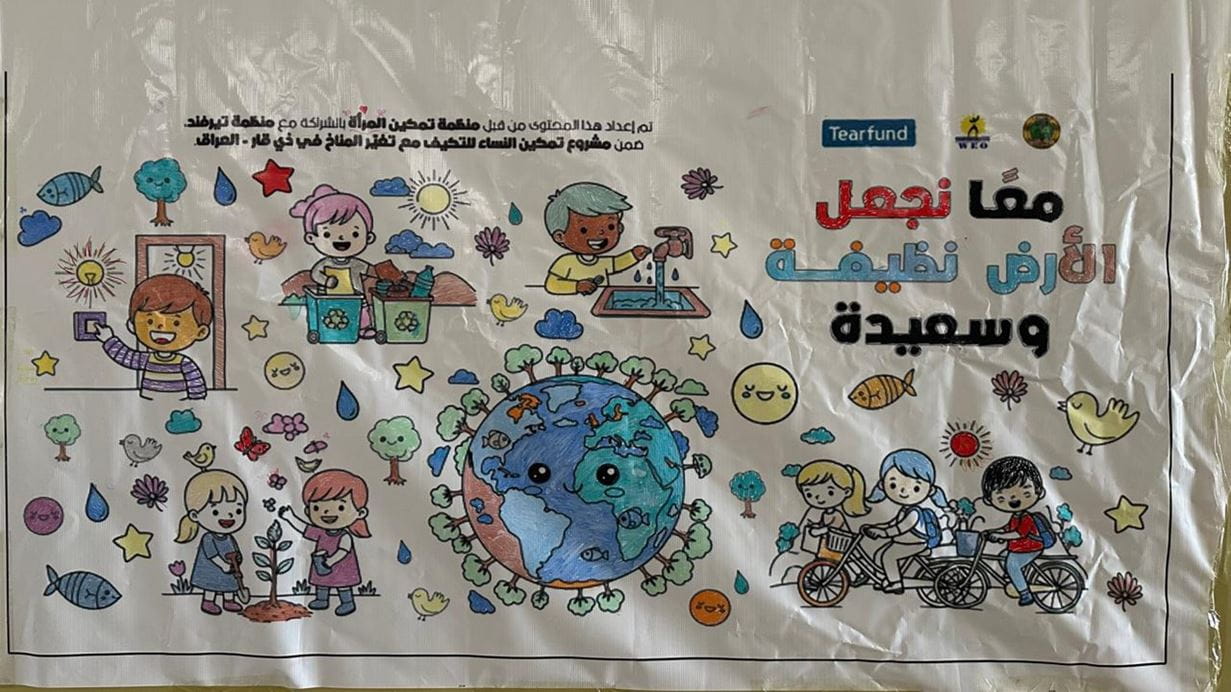
Colorful cartoon poster depicting children engaging in environmental activities around Earth.

As part of the tree planting event hosted by Tearfund, students and teachers attended sessions encouraging them to think about ways to improve their environment. Credit: Tearfund

Effective collaboration

Getting her students and staff involved, as Amal had been encouraged and equipped to do through the training, has made the work of improving the school more collaborative and much more effective!

And one particularly significant outcome of the training that Amal feels proud they have achieved has been raising funds for a wheelchair for one student who had lost her parents and whose family struggled financially.

Planting trees, growing futures

Amal’s school also took part in a tree planting event hosted by Tearfund and WEO. As part of this, the students and teachers planted trees together and attended sessions encouraging them to think about ways to improve their own environment.

Amal says the training has given her renewed confidence and she described the experience as transformative – not only because of the practical skills she gained, but because it offered strong moral support and made her feel that her efforts mattered.

Plans for the future

Looking ahead, Amal has plans for even more sustainable, long-term improvements – including planting more trees and introducing modern irrigation methods to create a greener, more comfortable learning space for girls.

‘I’m happy to see the classrooms freshly painted, the air conditioners working again, and the school yard cleaner and greener,’ she says. ‘The atmosphere has completely changed!

‘I want to see my school full of green spaces and positive energy. I want to see every corner of my school green with plants.’

Written by

Written by  Tarryn Pegna

Share this page

Share this page to spread the word and help support those in need.

Get our email updates

Learn about our work and stay in touch with Tearfund. Hear about our news, activities and appeals by email.

Sign up now - Get our email updates