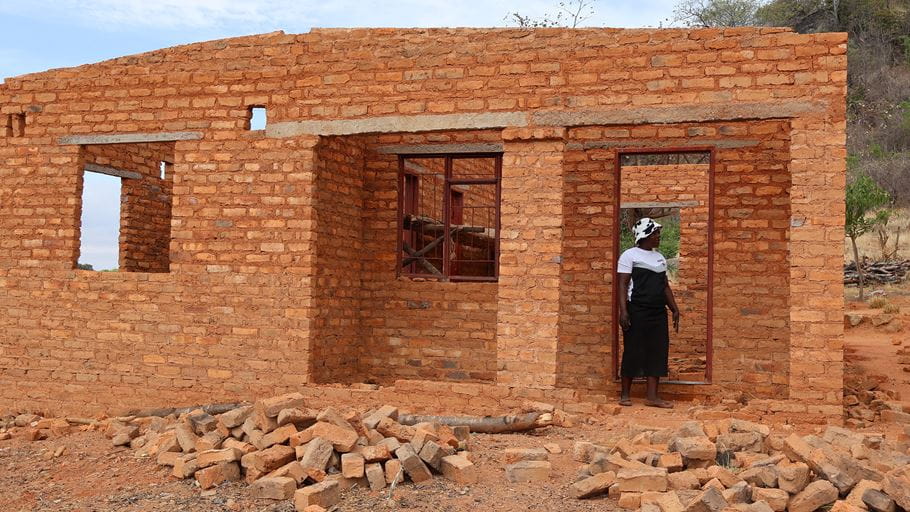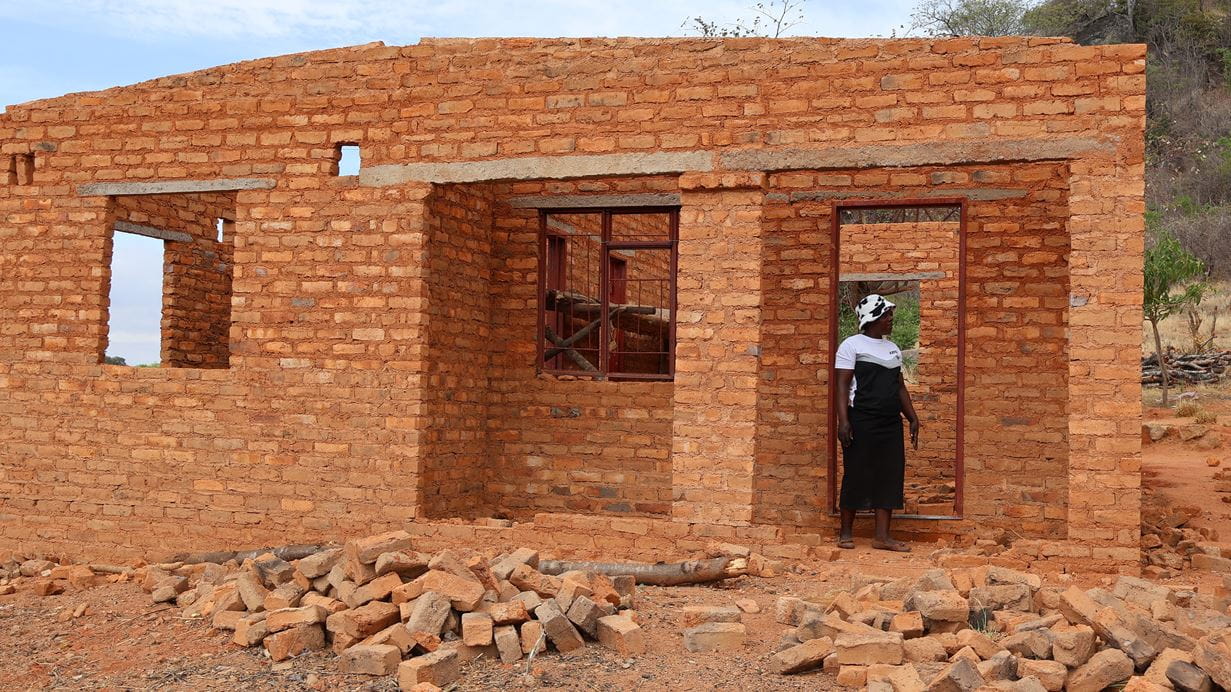
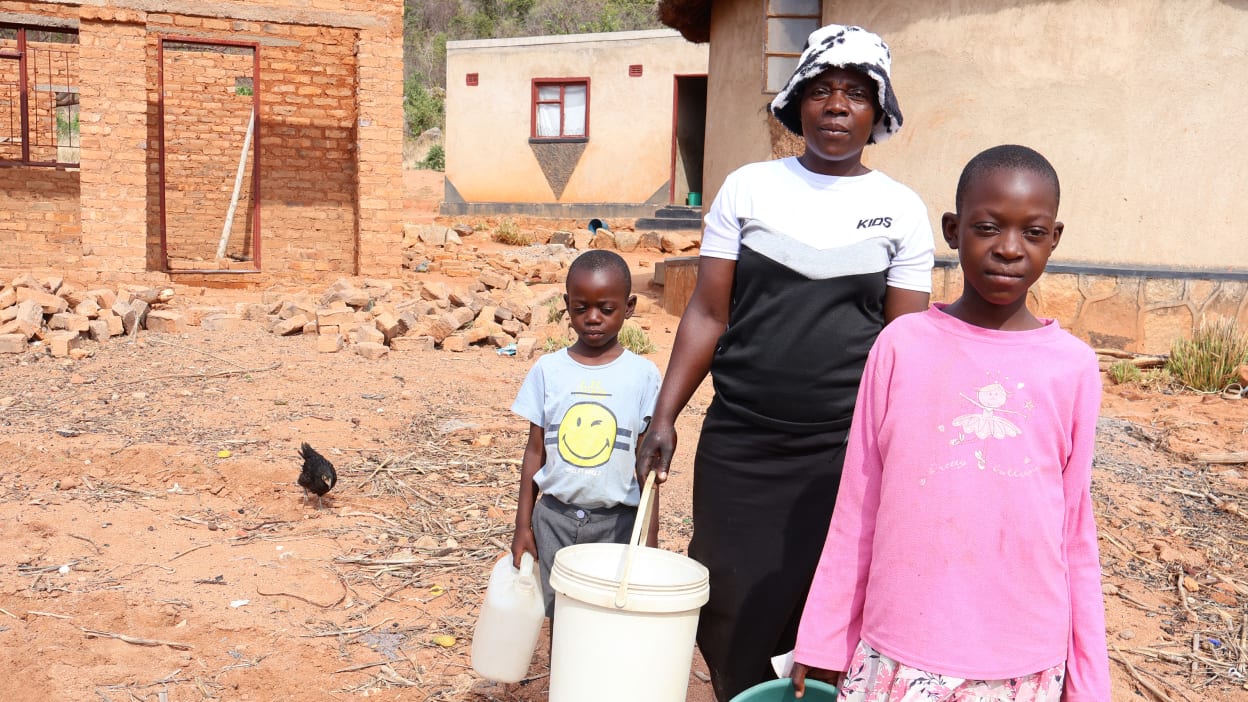
‘Now we can collect water quickly and come back home early. The children no longer miss their chores or come home when it is already dark, preventing sexual violence,’ says Munodei from Zimbabwe.
Thanks to support from Tearfund, Munodei’s children no longer face the risk of assault by having to walk alone in the evening to collect water. Nor does she have to make back-breaking journeys carrying heavy buckets or pushing wheelbarrows of water that she’s had to pump from a crowded well.
At risk of sexual assault
It wasn’t always this way. ‘Before the [water tap] was solarised, the children would sometimes spend an hour and a half pumping water. They walked ten kilometres to school every day, and still had to fetch water when they got home. Sometimes they came back late in the night, making them vulnerable to sexual abuse.
‘Pumping water for years tired our bodies, especially us women. Sometimes I would feel too weak, but I knew I had to keep going.’
Exhausted and living with HIV
Munodei raised her five children mostly alone in Shayanewako Village after her husband left in 2005 to find work in another town. She went with him at first. ‘Life was very difficult in Beitbridge. We tried staying there… but things did not work out so we made a decision with my husband that l come back home.’
For years, Munodei walked a 20 kilometre round-trip every day to tend a garden for people living with HIV in Chikuku. ‘I walked that whole distance because I needed food for my children. But some days, my legs would shake from tiredness.’ Life was a constant cycle of walking, working and worrying.
Munodei had to keep going for the sake of her children. ‘My body would get tired, but my heart refused to give up. I must live for my children. I must fight for them.’
Today, she remains the primary caregiver, supporting four children who are still in school. Her eldest daughter, Rejoice, now works in Mutare after completing secondary school.