
Culturally, collecting water in rural Pakistan is a woman’s job. Using rounded clay pots, known locally as matka or ghara, which they balance carefully on their heads, women like Laila* in Umerrkot often walk long distances for the task.
The clay pots are porous, which allows some of the water to evaporate slightly, keeping it naturally cool during days when the heat becomes fierce, but they can only hold ten litres at a time. And, for a woman in her 60s, like Laila, the strength and energy required to do the journey four or five times every day to provide for family, crops and livestock is a heavy task.
It’s particularly hard because the area where Laila and her husband, Teekam, live is extremely dry. It’s a region that has traditionally struggled with seasons of drought, but as Pakistan finds itself one of the countries in the world most immediately and negatively impacted by the climate crisis already, those periods without water have been getting longer and more challenging.
Drought disaster
London, where Tearfund’s UK office is, has just experienced its first month without rain in 150 years. The heat and drought have brought hosepipe bans, dead grass and sleep and travel disruption.
But, for a family that relies on farming to survive, the unbroken heat and parched land is more than an uncomfortable experience, it’s a disaster.
UK farmers are warning of food shortages looming because of the drought locally. For Laila and Teekam, they are already living in that reality.
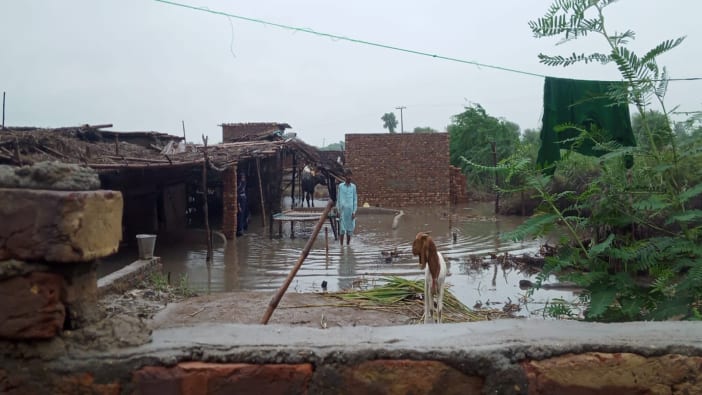
Even the monsoon rains that come each year to Pakistan, ironically sometimes interspersing the deadly droughts with equally destructive flooding, can no longer be relied upon to bring some relief from the lack of water.
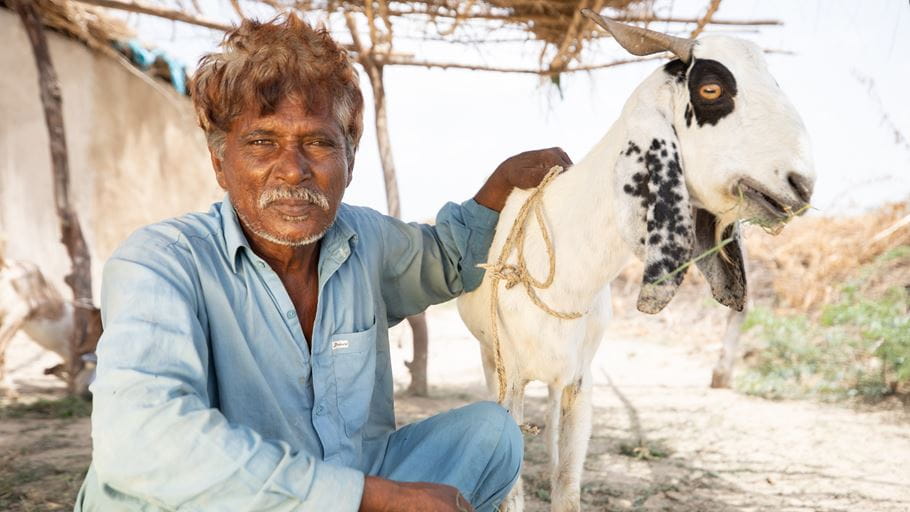
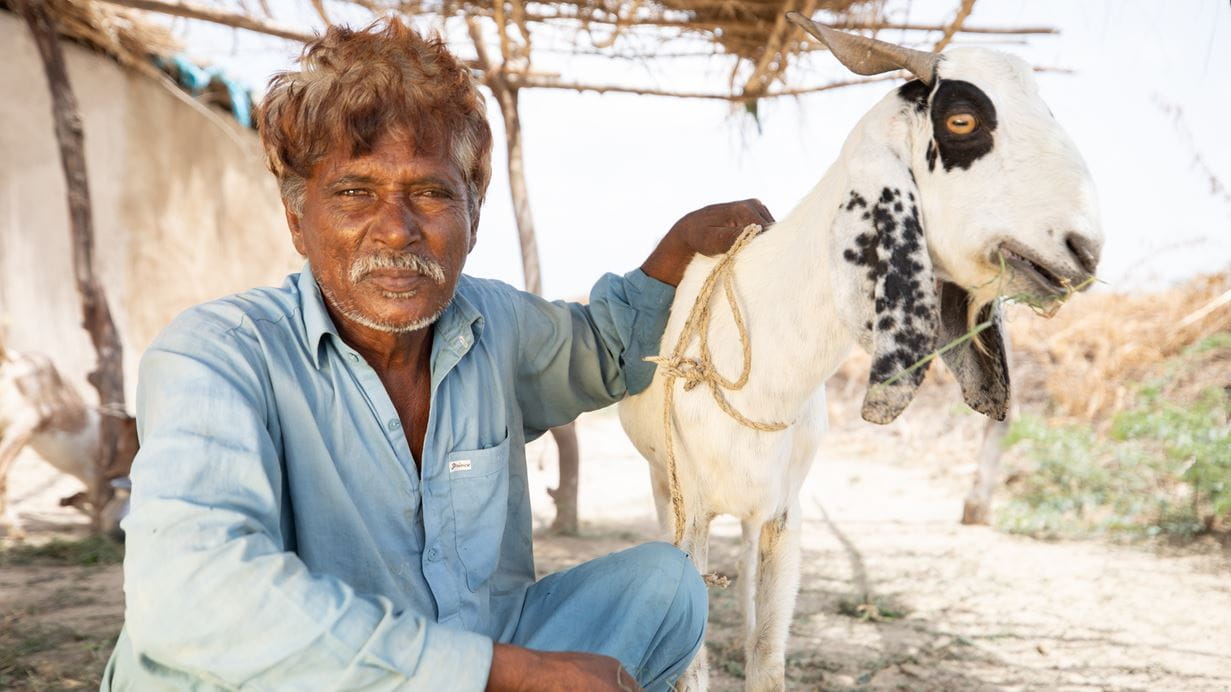
‘My past has been very hard,’ Teekam tells us quietly. He describes how the family lost everything in terrible monsoon flooding in 2011 and had to start again with nothing.
‘Since then,’ he says, ‘we are still trying to stabilise. And now the drought has come.’
The farmland Teekam once cultivated, which he and Laila relied on as they raised their two sons (now adults with their own families), is shrinking. From two fertile acres, he now only has half an acre left because the land has been destroyed by drought. ‘In ten years,’ he warns, ‘we may not have any land to cultivate at all due to no access to water.’