Skip to content Skip to cookie consent
Tearfund home
Donate

Surviving the outbreak: Ebola in the DRC

Loice is a nurse in the city of Bunia in the Democratic Republic of Congo. She’s also survived the Ebola virus.

Written by Tarryn Pegna | 20 Aug 2026

Woman washing her hands at a blue portable handwashing station with "Tearfund" and "PPSSP" logos.

Loice uses the handwashing station Tearfund’s local partner has provided. Being able to keep hands clean is vital in stopping the spread of Ebola. Credit: Basila Wetshi Gianni/PPSSP

Loice is a nurse in the city of Bunia in the Democratic Republic of Congo (DRC). At 32 years of age, she’s a single mother to her 12-year-old daughter. She’s also one of at least 155 health workers who have been confirmed to have contracted the Ebola virus so far.

The current outbreak is now the deadliest in the country’s history. Of the 5,105 cases confirmed (as at 17 August), at least 2,420 have been fatal – that’s approximately 47 per cent.

Ituri, the province where Loice lives, is the epicentre of it all. It’s where this outbreak was first reported, and more than 3,400 of the cases have been recorded here.

And while the statistics reflect the scale and spread of the virus, what they don’t fully convey is the pain, fear and individual heartache for each patient, and for every person around them.

Loice survived and has recovered, but her life has been incredibly difficult in the aftermath.

Loice: a survivor’s story

‘On 16 June 2026, about a month after the official declaration of the 17th Ebola virus disease (EVD) epidemic in the DRC, I went to a local healthcare facility because I was experiencing headaches, fatigue and a loss of appetite.

‘After some medical tests, I received treatment for malaria and typhoid fever. But, my condition continued to get worse.

‘So, I went to a medical center, where I was diagnosed with EVD. I was extremely anxious at the time of my admission to the Ebola Treatment Center (ETC) and, given everything I had heard about this disease, I had lost all hope.
‘Given everything I had heard about this disease, I had lost all hope.’
Loice, Ebola survivor, DRC

‘At the ETC, I was well cared for, well fed, and well clothed. I was admitted on 29 June 2026 and I started feeling better after four days of treatment. I was discharged on 11 July 2026, having been declared cured.

‘I am grateful to God and I appreciate the efforts of the health workers who contributed to my recovery.

‘However, once released from the ETC, I began a new stage of life marked by many different challenges: upon returning home, I was not welcomed in the neighborhood because many people doubted my recovery. Some people thought that, in addition to having EVD, I was HIV-positive.

‘On top of that, my mattress, blanket, sheets, clothes and other household items were incinerated by the decontamination team.

‘I also no longer had a job to go to because the healthcare center where I’d been nursing was shut down by health authorities after multiple cases of EVD were reported there.

‘Faced with stigma, the loss of my job and my belongings, and feeling very embarrassed, I did not know what to do.

‘Thankfully, after hearing about my situation, my former employer decided to take me into her home.’

‘Even though I still experience headaches and insomnia, which is typical of many EVD survivors, I remain hopeful and trust that God’s mercy will make my future bright.’
Loice, Ebola survivor, DRC

Tearfund’s local partner, PPSSP, has also provided some support for Loice – including through counselling and home visits to help ease the anxiety she was struggling with after the shock of the illness, the loss of loved ones, and the fear of being impacted by the disease again.

She says this has restored her self-esteem, and she now feels loved, heard and recognised as a full human being once again – rather than being seen as a source of danger in her host family and the wider community.

Her willingness to speak freely with others in her community about her journey through illness and recovery has allowed her to break down fear and combat stigma around the disease, and has also given her a voice to guide her loved ones and other community members toward staying safe from this epidemic.

She says, ‘Thanks to Tearfund and their partner, PPSSP, I’ve received psychological support which has helped me see myself as a survivor.

‘I also received a full hand-washing kit, which includes a stool, an 800g bar of soap and two 20-liter plastic buckets with a tap, enabling me and my family members to keep our hands clean.

‘My community has also benefited from awareness raising by PPSSP’s team, and my neighbours now understand EVD better and have welcomed me back.

‘I’m very grateful to PPSSP and Tearfund. Thanks to them, I have recovered the hope for my life and future.

‘Even though I still experience headaches and insomnia, which is typical of many EVD survivors, I remain hopeful and trust that God’s mercy will make my future bright.’

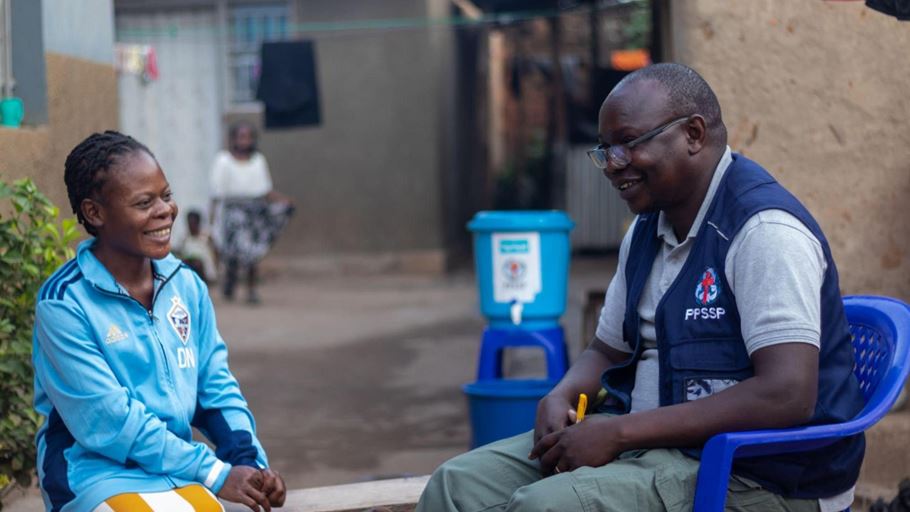
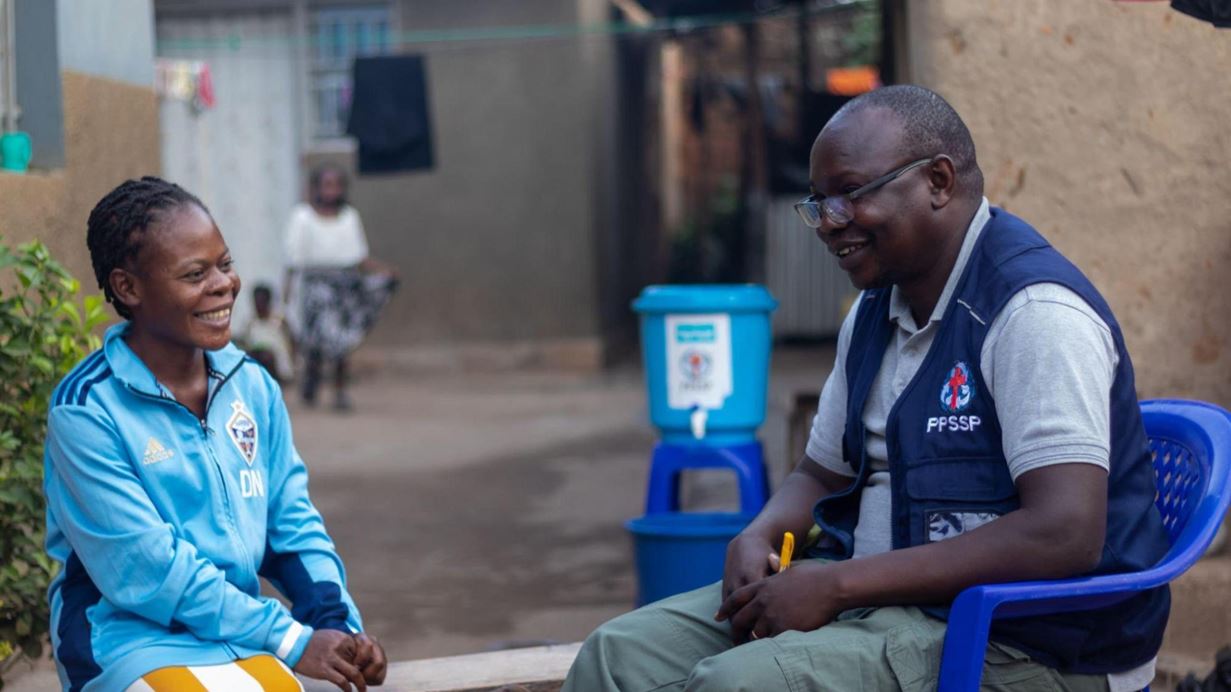
A smiling woman in a light blue tracksuit talks to a smiling man in glasses and a blue PPSSP vest. They are outdoors, with a blue water dispenser and residential buildings in the background.

Loice shares her story freely, helping raise awareness in her community about the disease and how to prevent it. Credit: Basila Wetshi Gianni/PPSSP

Ebola in the DRC: context and challenges

Across eastern DRC, 2.6 million people are seriously malnourished. More than half of these are in Ituri.

Ongoing violent conflicts in the region, large amounts of population movement, difficulty gaining access to communities by road, and a lack of – and sometimes mistrust of – health services has enabled the virus to spread quickly.

And the response has also been hampered by attacks on healthcare facilities, often as a consequence of misinformation about safe burial practices which causes upset in grieving communities.

The World Health Organisation (WHO) estimates that more than 70 per cent of people who die of Ebola do so not in health centres, but in the community, where traditional expressions of respect and grief for the dead include contact with the body of the deceased. This makes lack of awareness on safe burial practices and on vital decontamination processes extremely dangerous for all those in the community.

Strikes by some health workers after they did not receive payment have further complicated efforts to respond to the outbreak and a shortage of personal protective equipment, such as gloves and face masks, has made being a healthcare worker, like Loice, a very risky role.

Along with these circumstances, the particular strain of Ebola that is being spread, the Bundibugyo strain, has been very rare until now and there is no recognised treatment, vaccine or cure yet.

Of the confirmed cases, 1,000 people have recovered and 730 remain in healthcare or isolation facilities.

‘Of the confirmed Ebola virus cases in the DRC, 1,000 people have recovered and 730 remain in healthcare or isolation facilities.’

What is Ebola Virus Disease (EVD)?

Ebola is a version of the orthoebolavirus. It is rare, but usually severe and often fatal. It affects humans and other primates, and the primary carrier of it is thought to be fruit bats. (Other wild animals, such as porcupines and non-human primates are also known to host the disease.)

Ebola is transmitted through direct contact with blood, secretions, organs or other body fluids of infected people or animals. This can include dead bodies and contaminated surfaces or materials, such as bedding or clothing.

The virus does not spread through the air, like respiratory viruses, and a person is only contagious after they begin showing symptoms.

Symptoms may take between 2 and 21 days to show and, according to the WHO, may include fever, fatigue, muscle pain and weakness, headache and sore throat. These initial symptoms are usually followed by vomiting, diarrhoea, abdominal pain, rash and symptoms of impaired kidney and liver functions, and may develop to unexplained bleeding, bruising or hemorrhaging.

While the Budibugyo strain of the virus has no recognised treatment, if it is caught early and a patient receives intensive supportive care, including oral or intravenous rehydration, and treatment for the specific symptoms, this can significantly improve their possibility for survival.

Please join us in prayer for Loice and all those facing the epidemic.

If you’d like to join us in regular prayer, sign up here.

If you’d like to give to help Tearfund respond to the Ebola outbreak, please donate here.

Prayer requests from Loice

    • Please pray for her, and for other people who have lost jobs or providers in the family because of Ebola, to have an income-generating activity that would allow them to support their families.
    • Pray for Loice, and the many other people like her, who have had essential household items damaged or destroyed because of necessary decontamination. Ask God to provide for their needs.
    • Pray for an end to the spread of the virus and that those who are ill would be healed and restored. Pray for comfort for those who have lost loved ones.

Written by

Written by  Tarryn Pegna

Share this page

Share this page to spread the word and help support those in need.

Get our email updates

Learn about our work and stay in touch with Tearfund. Hear about our news, activities and appeals by email.

Sign up now - Get our email updates