Skip to content Skip to cookie consent
Tearfund home
Donate

Are we measuring what matters? (Introducing the Light Wheel)

The Light Wheel is a tool developed by Tearfund to help us think more practically and holistically about transformation.

Written by Lydia Powell | 01 Oct 2026

Four people, including three women and one man, gather around a hand-drawn radar chart taped to a wall. One woman in a red top points to the chart, which displays metrics like 'Capabilities' and 'Steward of the Environment', with lines comparing data from '2022' and '2024'.

Church facilitators learning how to use the Light Wheel to measure holistic transformation in Nigeria. Credit: Nanmet Anthony/Tearfund

Wellbeing. Flourishing. Holistic impact. What do these concepts mean to you? We often use these aspirational terms in the NGO sector* to describe the big-picture changes we want to see in the lives of the individuals and communities we work with.

But do we really understand what we mean by these terms? What changes are we hoping to see? How do we measure whether this kind of ‘whole-life’ change is actually taking place?

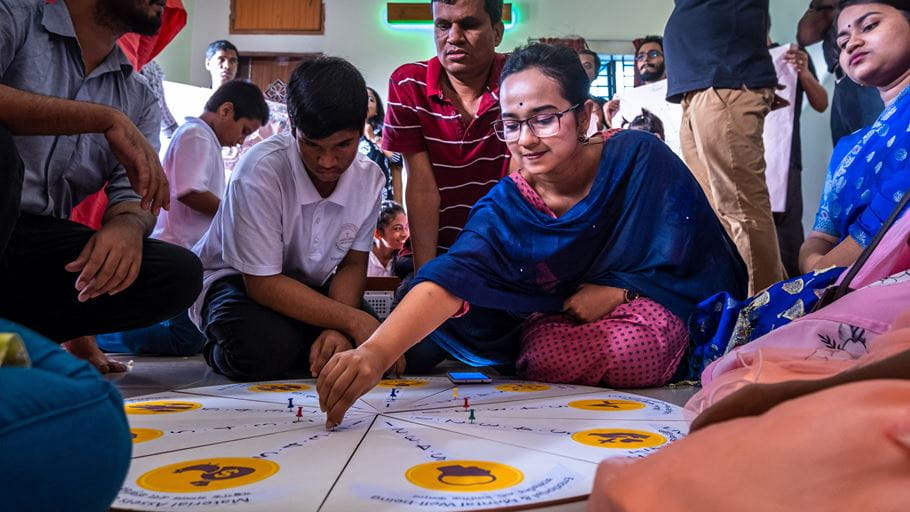
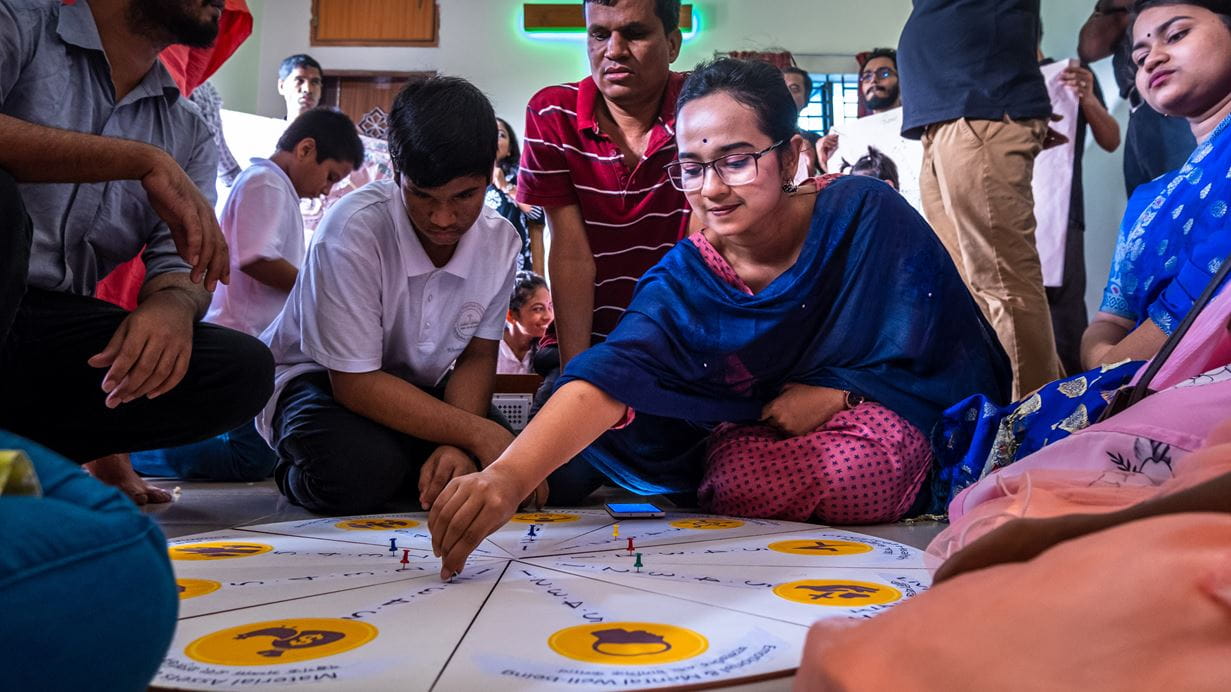
A young woman in glasses and a blue shawl places a pin on a large circular board game on the floor, surrounded by other adults and young people.

Participants of a Light Wheel discussion in Bangladesh scoring the maturity model. Credit: Amit Rudro/Tearfund

The limitations of traditional monitoring, evaluation and learning tools

Traditional monitoring, evaluation and learning (MEL) tools typically focus on measuring material and quantifiable outcomes in areas such as income, health and education. But there is now growing recognition that many intangible factors, such as social connectedness, mental health, environment and faith, impact people’s wellbeing just as significantly, if not more so.

To truly understand people’s lived experiences, and what matters most to them, we need tools and indicators that are broader, more flexible and measure transformation in these less tangible areas of life.

What's more, if we really want to measure what matters most then we need to invest in participatory MEL tools. Such tools give space for communities to define what progress means to them, in contrast to traditional top-down approaches.

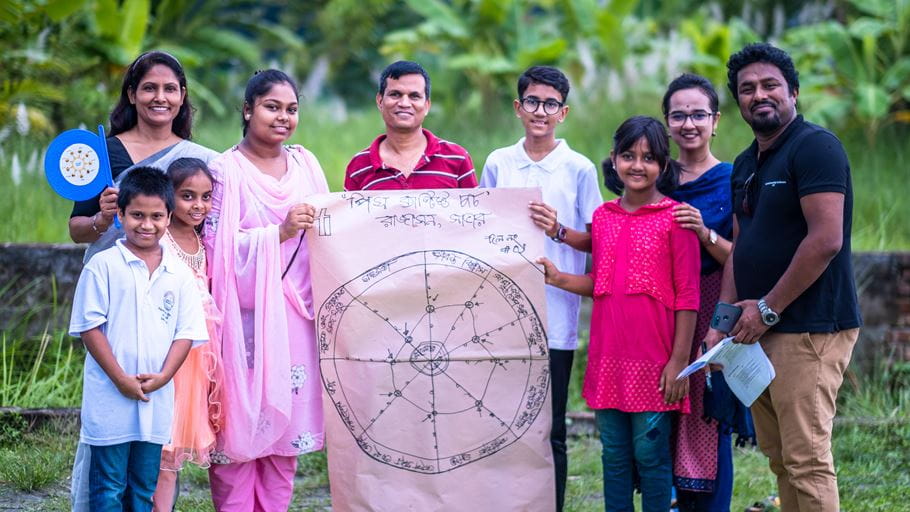
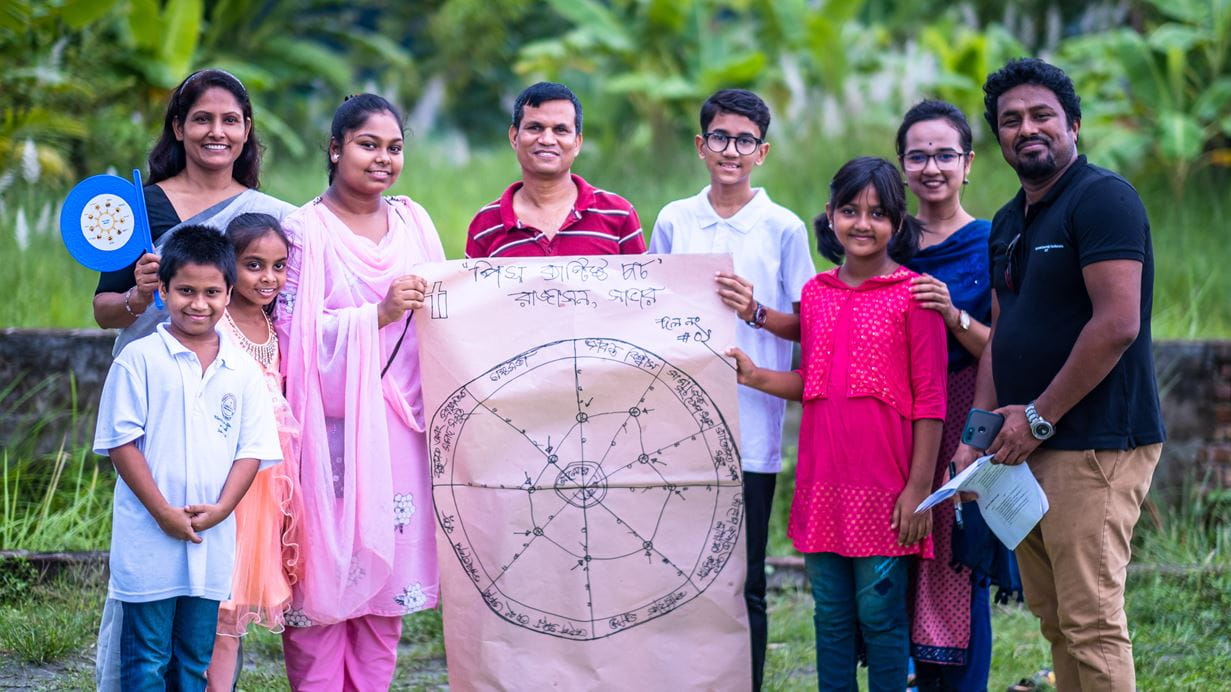
A smiling group of nine people, including adults and children, stand outdoors against a green background. Two adults in the centre hold up a large piece of brown paper with a hand-drawn circular diagram and text. A woman on the left holds a blue, circular device with lights, and a man on the right holds white papers.

Participants of a Light Wheel discussion in Bangladesh. Credit: Amit Rudro/Tearfund

Taking a relational approach  

Concepts of human ‘flourishing’ and ‘wholism’ are not new. Ancient philosophies across many different cultures have long understood the interconnectedness of humans with each other, with nature and with the divine, and the importance of finding harmony within these relationships. Examples include the Latin American concept of buen vivir, the Māori whānau ora or the southern African ubuntu.

As a Christian organisation, Tearfund also sees flourishing relationships at the heart of what it means to live well. That’s why we take a relational, holistic approach in our response to poverty. Integral mission shapes our commitment to mobilising and equipping churches and organisations to bring about whole-life transformation and justice in a broken world so that people might experience life in abundance.

In the development sector, at a global level, we are also seeing a growing recognition of the need to broaden definitions of development and how progress is measured. Global initiatives, such Harvard’s Global Flourishing study and the UN’s Beyond GDP project, are researching different wellbeing indicators which go beyond economic measures to instead look at what people really value (eg social, emotional and spiritual dimensions). These global initiatives could revolutionise future policy and decision making. As the UN’s Beyond GDP report puts it: ‘Better decisions require better measures.’

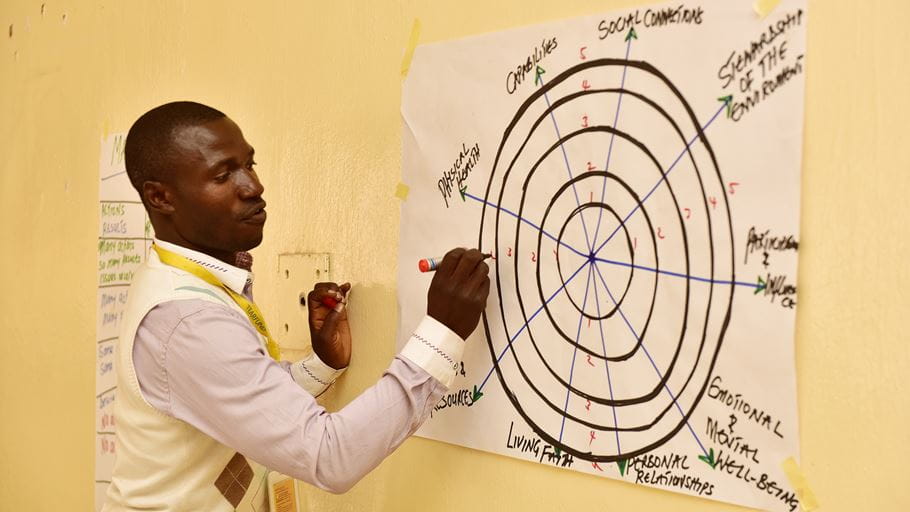
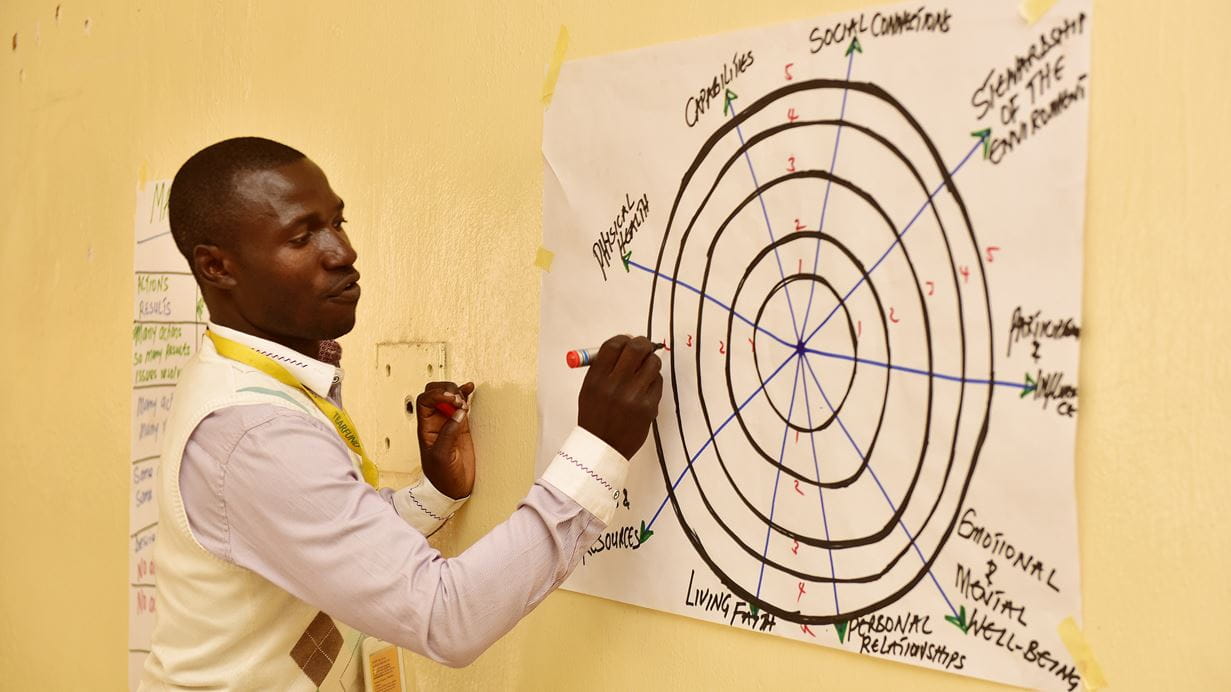
A man in a light shirt and argyle pattern vest writes with a red pen on a large circular chart taped to a yellow wall. The chart features concentric circles, radial lines, and handwritten labels including "Capabilities," "Social Connections," and "Stewardship of the Environment."

A Tearfund trainer in Nigeria explains how to use the Light Wheel to measure holistic transformation. Credit: Nanmet Anthony/Tearfund

How can we measure what matters?

As NGOs working with local communities and actors in many different places around the world, we need practical, participatory MEL tools which have been locally created, are available to all and can be easily adapted for use in different local contexts.

In 2013, Tearfund first developed a multidimensional wellbeing framework, known as the Light Wheel, for conceptualising, working towards and measuring holistic impact. Co-created with staff and partners globally, the Light Wheel has now been tested, refined and applied in over 50 countries.

It is a flexible framework that can be used in many ways. It is, first and foremost, a conceptual tool to help people reflect on their experiences and wellbeing from a whole-life perspective. It also has a set of evaluation tools that enable communities to take the lead in assessing their situations holistically.

Jonathan Simpson, a Light Wheel practitioner in Zimbabwe, describes the Light Wheel as a tool that ‘enables us to capture the richness of people’s lived experiences and the depth of change they are experiencing.’
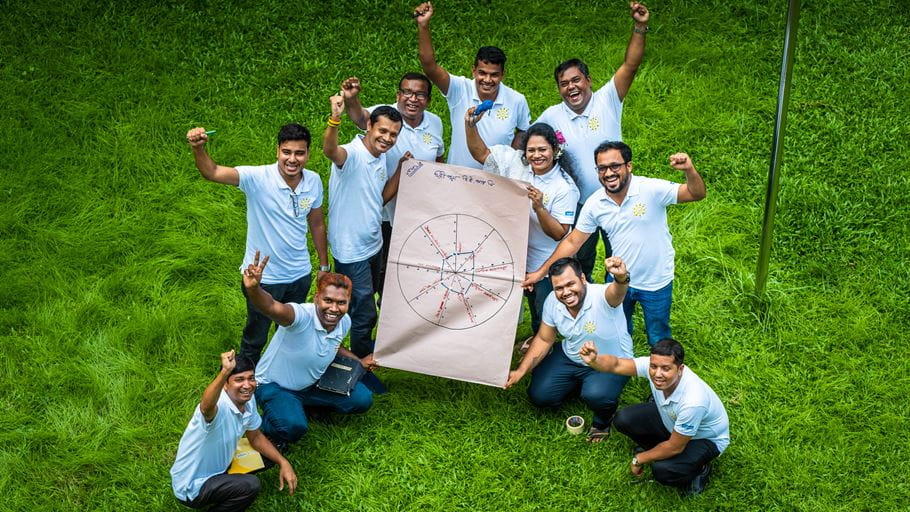
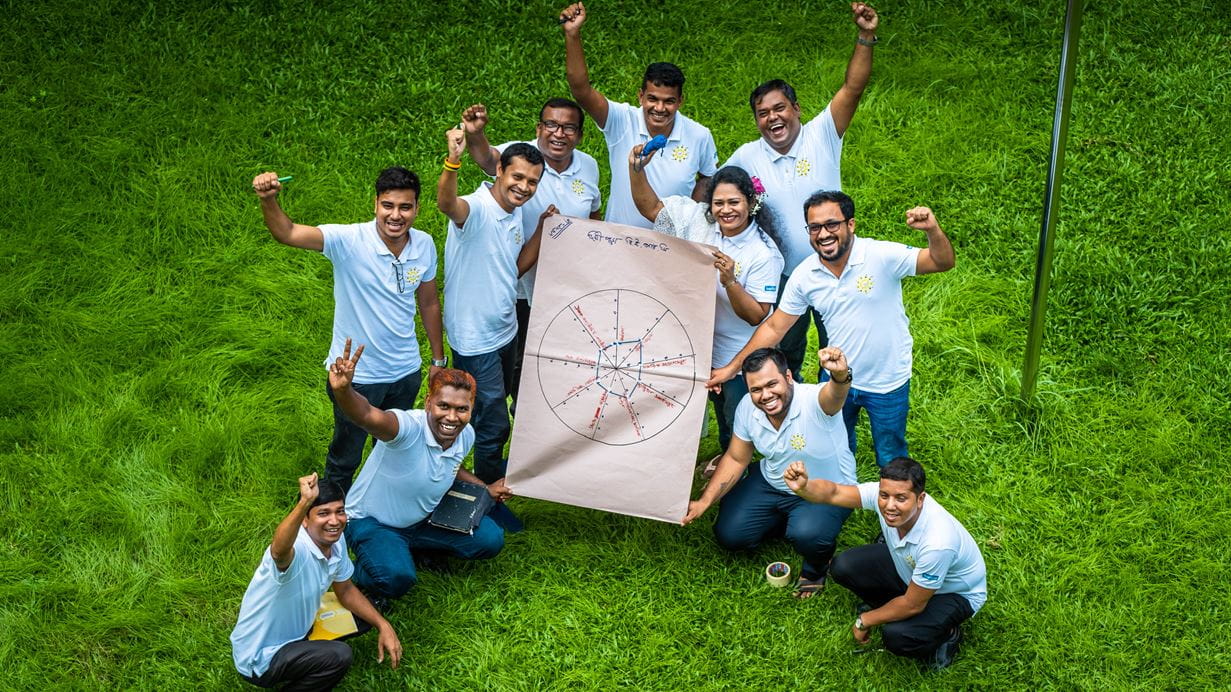
Ten adults, mostly men, wearing light polo shirts with yellow logos, stand and crouch on vibrant green grass. They are smiling, around a large brown sheet of paper displaying a circular diagram.

Participants at a Light Wheel training workshop in Bangladesh. Credit: Amit Rudro/Tearfund

What is the Light Wheel?

The Light Wheel is made up of nine domains of wellbeing. These are presented as interconnected spokes of a wheel to show their interdependence and equal importance. The nine domains include more typically measured aspects (such as material assets and physical health) alongside more intangible areas (like emotional wellbeing, participation and social connections) to give a fuller picture of an individual’s or community’s life.

The Light Wheel toolkit has a variety of qualitative and quantitative data collection tools. These enable people to assess their situations in each of the nine aspects of wellbeing, then work towards, and measure, the change they want to see in their lives.

‘We encourage people to explore how the tools might help their work take a more holistic view and to design evaluation approaches that capture more of what matters to the people we work alongside. The Light Wheel also has a set of Bible studies that can help individuals and small groups to reflect on each aspect of wellbeing from a Christian perspective.’

The tools are designed to be participatory and visual, so they are accessible to people with low levels of literacy. Many of the tools can be facilitated by people with little or no prior experience in monitoring and evaluation (such as the local faith actors and churches that Tearfund works with).

Local communities often find the experience of taking part in a Light Wheel activity to be transformative in itself, as they become co-creators in evaluating their own situations and sharing their perspectives on what is meaningful to them.

The data generated by the Light Wheel helps us to design interventions that take a more holistic view and meet the needs of local communities more closely.

Omar Herrera, Director of PRODAD in Nicaragua, says: ‘We often assume what people need or want, but the findings from our Light Wheel evaluation help us to know more about what the community really thinks and feels.’

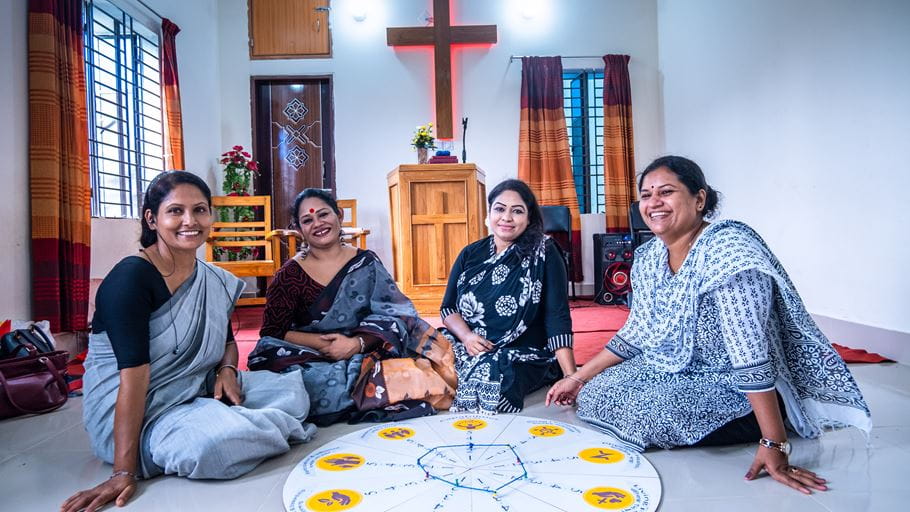
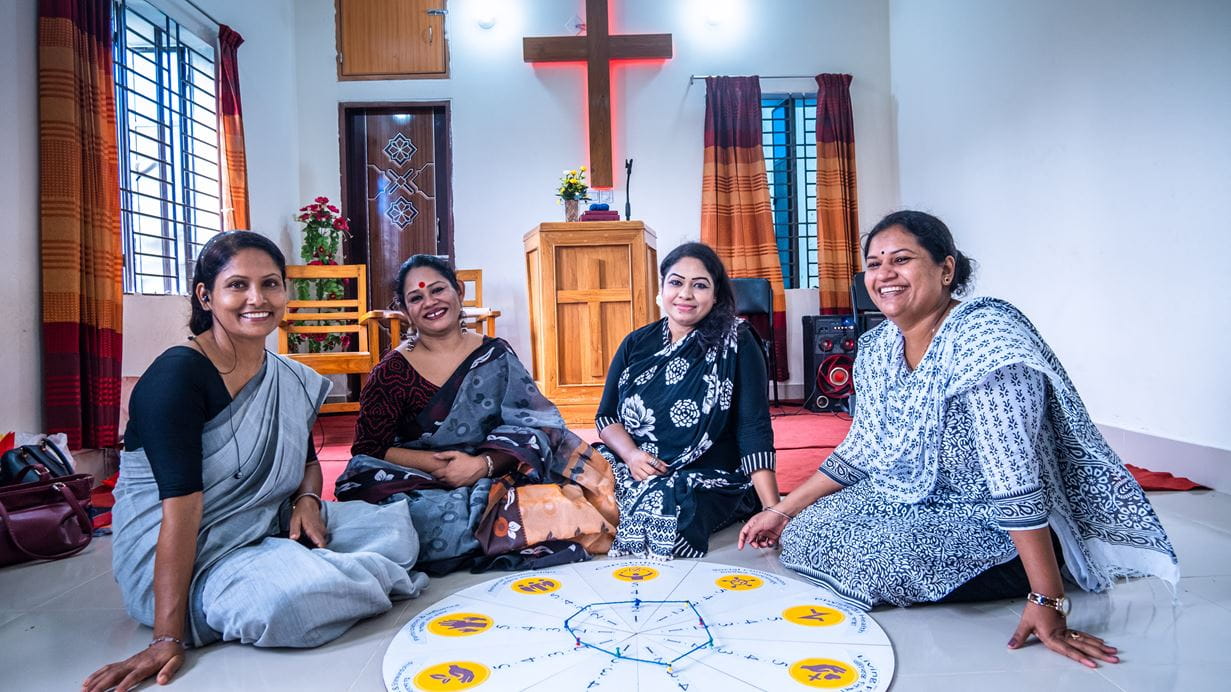
Four smiling women sit on the floor in a room, with a large circular board in front of them and a wooden cross and pulpit in the background.

Participants at a Light Wheel discussion in Bangladesh. Credit: Amit Rudro/Tearfund

Would you like to use the Light Wheel?

The Light Wheel tools are a tried and tested way of thinking about, planning for and measuring holistic wellbeing. They are freely available on Tearfund Learn for download and use in English, French and Spanish, with more languages coming soon.

We encourage people to explore how the tools might help their work take a more holistic view and to design evaluation approaches that capture more of what matters to the people we work alongside. The Light Wheel also has a set of Bible studies that can help individuals and small groups to reflect on each aspect of wellbeing from a Christian perspective, also available on Tearfund Learn.

*What is the NGO sector?

 NGO stands for non-governmental organisation, and NGO sector refers to a global network of non-profit, mission-driven organisations that operate independently of direct government control to address social, environmental or humanitarian issues. It’s also sometimes referred to as the third sector.

Pray with us

    • Please pray for Tearfund and our local partners as we work to bring about whole-life transformation in communities around the world. Pray that more people would experience life in abundance as Jesus describes in John 10:10.
    • Lift up the churches and communities around the world who are using the Light Wheel as a tool to better understand themselves and re-imagine what the future could look like and how to get there.
    • Please pray for more NGOs and global bodies to take a holistic view when defining ‘development’. Pray that they would be moved to consider social, emotional, spiritual and environmental dimensions of poverty, alongside material provision.

Written by

Written by  Lydia Powell

Lydia Powell is an Impact and Effectiveness Officer at Tearfund.

Share this page

Share this page to spread the word and help support those in need.

Get our email updates

Learn about our work and stay in touch with Tearfund. Hear about our news, activities and appeals by email.

Sign up now - Get our email updates