Skip to content Skip to cookie consent
Tearfund home
Donate

Veg on the table and food for thought in Uganda

Sometimes, the answer to a better future can be found in a small plot of farmland (and a new way of looking at things).

Written by Tarryn Pegna | 26 Aug 2026

A smiling woman wearing a striped headwrap and beaded necklace tends to green plants, looking at the viewer. Another person is partially visible, also working with plants, with a thatched building in the background.

Magdalene and Samuel live in Uganda. They’ve been changing their lives (and the futures of their children) after training from Tearfund’s Transforming Communities programme at the local church Magdalene attends. Credit: Tom Price

It started with curiosity about where the delicious vegetables his wife was cooking were coming from. Then, he came to water the allotment a little bit. Next, he found himself helping ensure the irrigation pipes were in good repair and chasing off animals that had come to eat the crops growing!

Before too long, Samuel was attending the Transforming Communities sessions at church that had so inspired his wife.

Sometimes, the simplest things, though they may not always be the easiest, can have the most significant impact.

Sometimes, the answer to a big, frightening problem like how to feed a family and pay for education to offer children a better future can be found in a small plot of farmland (and a new way of looking at things).

‘When I came here, the Transforming Communities programme taught me something good,’ explains Magdalene, Samuel’s wife. ‘The training gave me knowledge and new ideas and ways of looking at things that I can use in my home. Now, I can provide for my family and not have to rely on other people.’
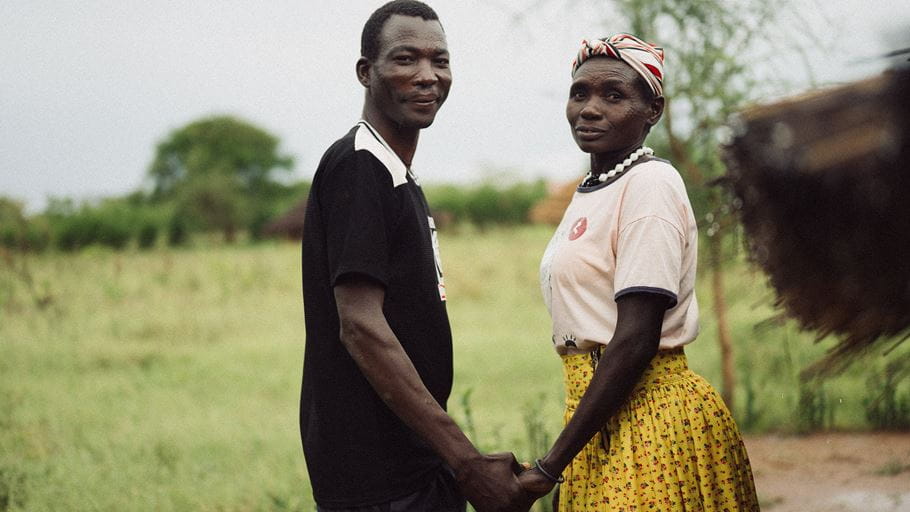
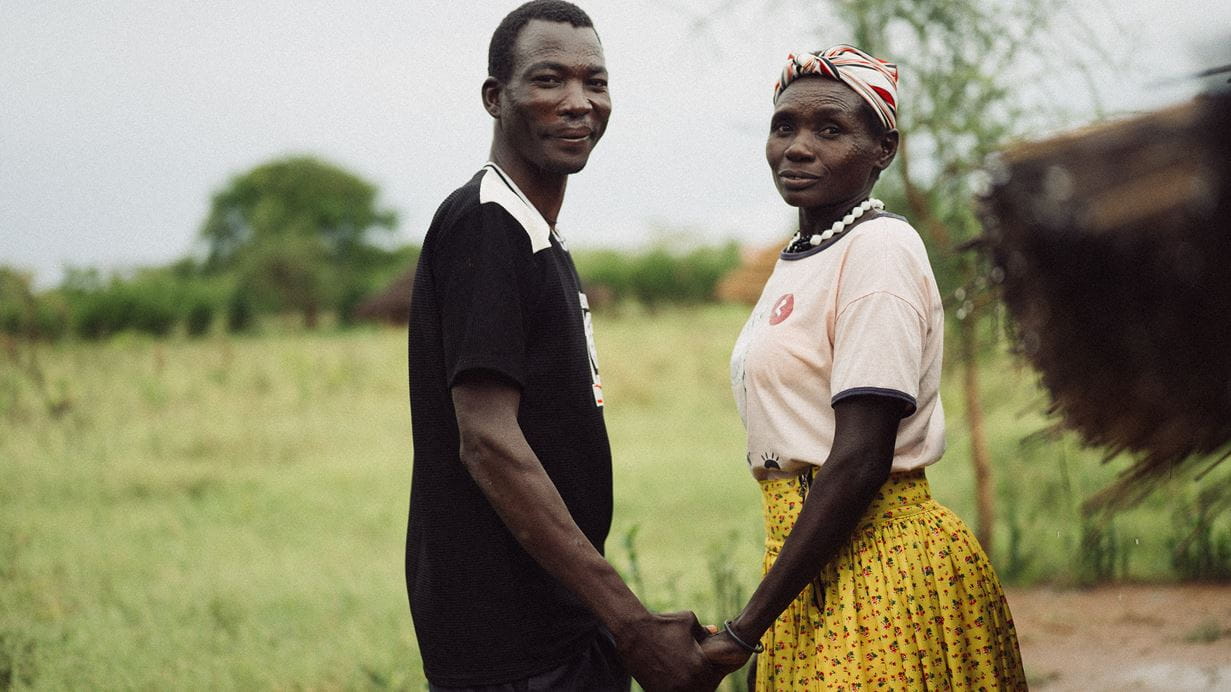
A man and a woman stand holding hands outdoors. The man wears a black t-shirt and the woman a pink t-shirt, yellow floral skirt, and striped headscarf. They both look towards the viewer with a grassy field in the background.

Magdalene and Samuel work together. ‘We need to handle our family in harmony together,’ says Magdalene, ‘agreeing on how we do things. And bringing home the lessons we have learnt so that even educating our children will be easy because there will be no wastefulness like there was in the past.' Credit: Tom Price

Magdalene and Samuel live in a village in Uganda.

Magdalene is 41 and Samuel is 50 years old, and the couple have eight children – two of whom are old enough for senior school, which means they’re away at boarding school. The other six are still young enough to attend school in the village.

That’s a lot of mouths to feed and fees to pay!

And an education for the children is a real priority for the couple. Magdalene says, ‘My heart wishes that my children can study so that they don’t have the same difficulties as me or my husband – we didn’t go to school.’ Instead, she longs for greater, brighter opportunities for them.

But, for a long time, the family struggled just to eat. They survived on Balanite leaves* and Magdalene took some casual labour when she could. Samuel, in desperation, resorted to some less savoury means of providing food – but the children were hungry and he was desperate and at times he didn’t see any other way.

‘The Transforming Communities programme taught me something good. The training gave me knowledge and new ideas and ways of looking at things that I can use in my home. Now, I can provide for my family and not have to rely on other people.’
Magdalene, Uganda

The family couldn’t afford to live together. Magdalene lived in her mother’s village and Samuel lived separately, even though they shared the children.

‘It was really bad,’ says Magdalene. ‘Sometimes we even just had to eat the residue of local brew.’** Samuel nods in agreement. ‘It was a very difficult time,’ he says.

‘Before,’ Magdalene says, ‘life was difficult in our village. If I didn’t manage to get some casual labour, maybe like fetching water to make a bit of money, my children wouldn’t have anything to eat. We used to have cows to milk, but our livestock was raided, and we were left in poverty.

‘So, that is how my life was. Picking Balanite leaves.’

Samuel’s uncle noticed their situation and offered them a piece of land, so the couple moved together with their children.

And then, Magdalene went to the local church.

She says, ‘As soon as I went to church, I met these groups. And that is what has made me forget all those problems!’

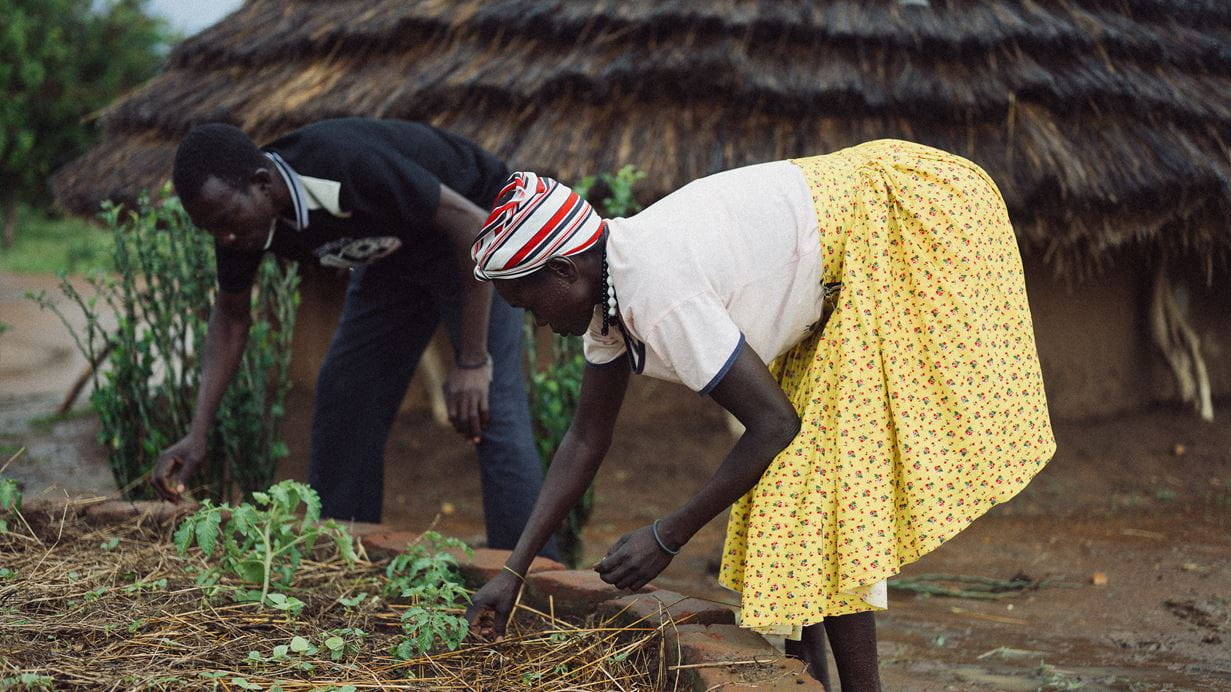
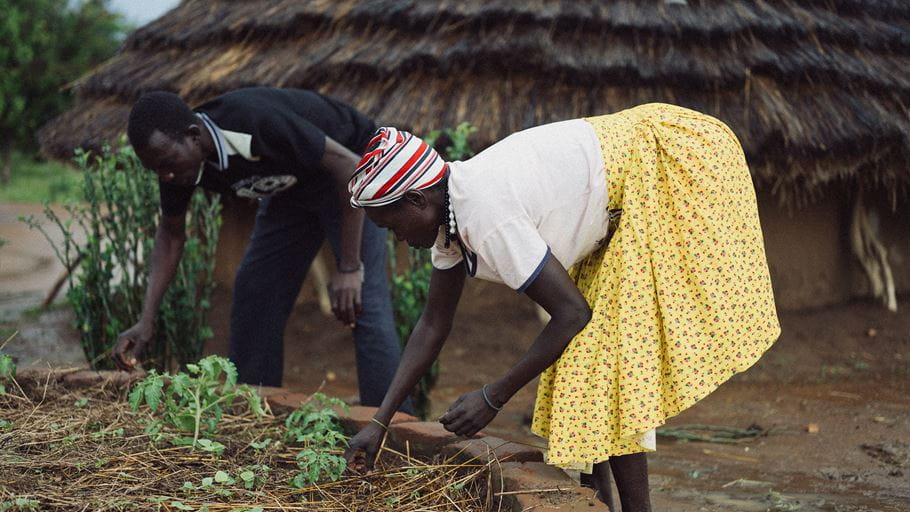
Two people, a man and a woman, tend to plants in an outdoor garden bed, with a thatched building visible in the background.

Magdalene and Samuel are working hard together, determined to ensure their children have an education and offer them the opportunities for the future that they themselves never had. Credit: Tom Price

Along with a place to pray and worship and find spiritual support, at church Magdalene encountered groups set up as part of Tearfund’s Transforming Communities programme.

These groups receive training and support to work together to find solutions to poverty. Guided through Bible-based teaching, members pray together, encourage one another, find practical projects to work on, and pool resources and money so that they can share easy-to-repay loans from the group when they need money for important things like school fees or investing in ways to build an income.

One of the first things Magdalene did, once she joined the group, was to start to work with them on a piece of shared farmland.

She and Samuel were also farming their own small piece of land, but being part of the group gave Magdalene an opportunity for extra food and income and provided her with new ways of thinking about her own crops.

‘What I was able to sell from what we grew in the group farm has enabled us to have our child in senior school,’ explains Magdalene.

‘When I plant tomatoes, I also plant onions, and then I take them to the market. If I see I haven’t earnt enough for the school fees yet, I borrow from the group and then pay the money back as soon as I can.’

‘I earn by digging with my hands! And God blesses what I grow – even if I only harvest two sacks, I can sell one to pay the group back. And that is what is enabling me to educate my children – taking loans and selling my crops.’

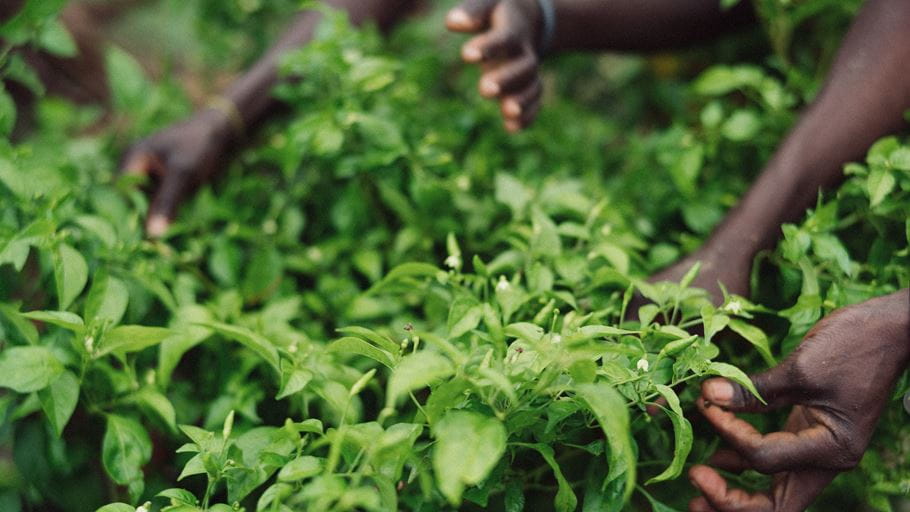
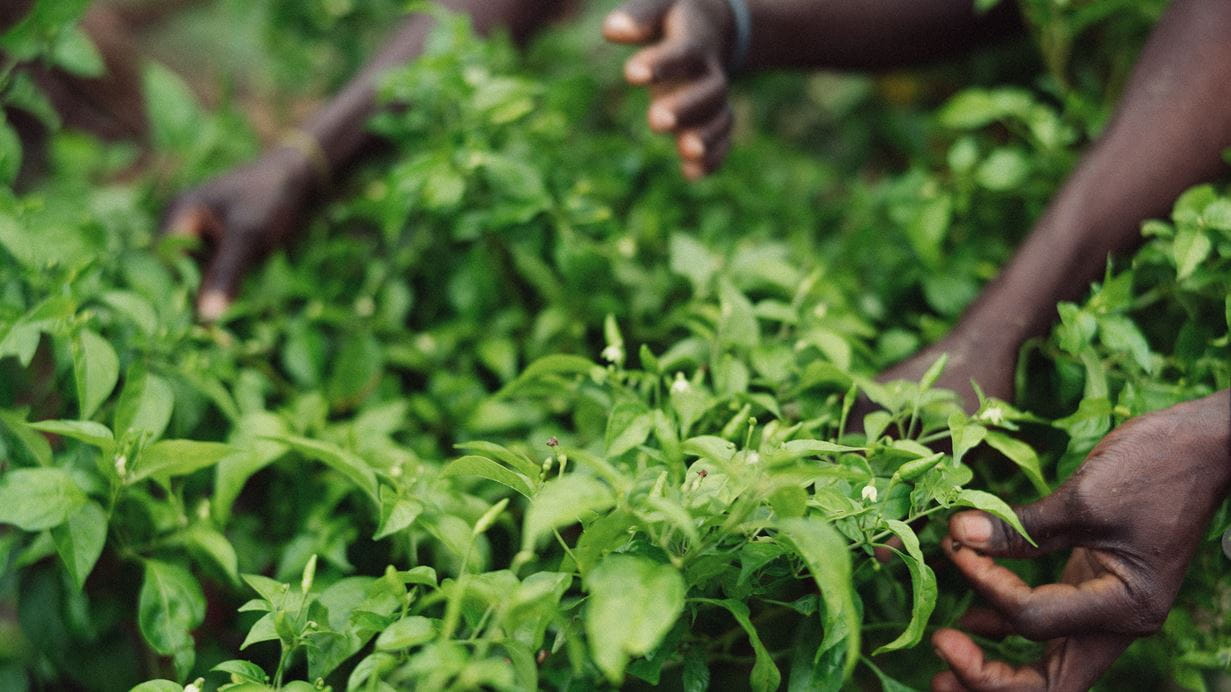
Multiple dark-skinned hands tend to lush green plants featuring small white flowers.

 ‘I found out that we can take control of our life. The food we need is right here in the ground that we walk on,’ says Samuel, who has found new inspiration in how to provide for his family after input from Tearfund’s Transforming Communities programme. Credit: Tom Price

Samuel hasn’t quite decided on his faith yet, but he’s been drawn to the group by the successes he’s seen Magdalene achieve.

He says, ‘What I have seen is that this has brought something very good to me. I’ve learnt you can get money from what you grow and you can save.

‘Like, we grow tomatoes, egg plants, onions. And from what we take to the market to sell, we can put what we choose into the group to save there, we keep some aside to buy more seeds to plant, and the rest we can spend on things like school books for the children.

‘This group has really helped me a lot – at least half of my problems are gone!

‘Farming here enabled me to take a loan from the group to buy pigs, but now my only problem is how I am going to keep them from eating all my crops! Pigs are very destructive – they’ll finish everything you plant!

‘But, I have a plan to construct a shelter for them and then I can grow the seeds safely.’

Samuel says his life has been changed so much through what the Transforming Communities programme has taught them.

‘I found out that we can take control of our life. The food we need is right here in the ground that we walk on. Opportunities are all around us. Even if you make bricks, that can be a part of giving you life. Or if you work breaking stones, you can sell them and then buy what you need or pay to send your child to school!’

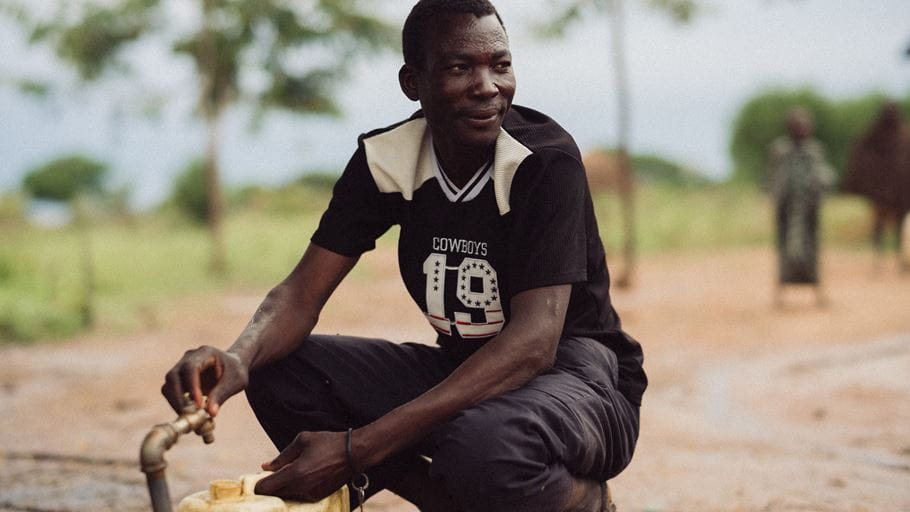
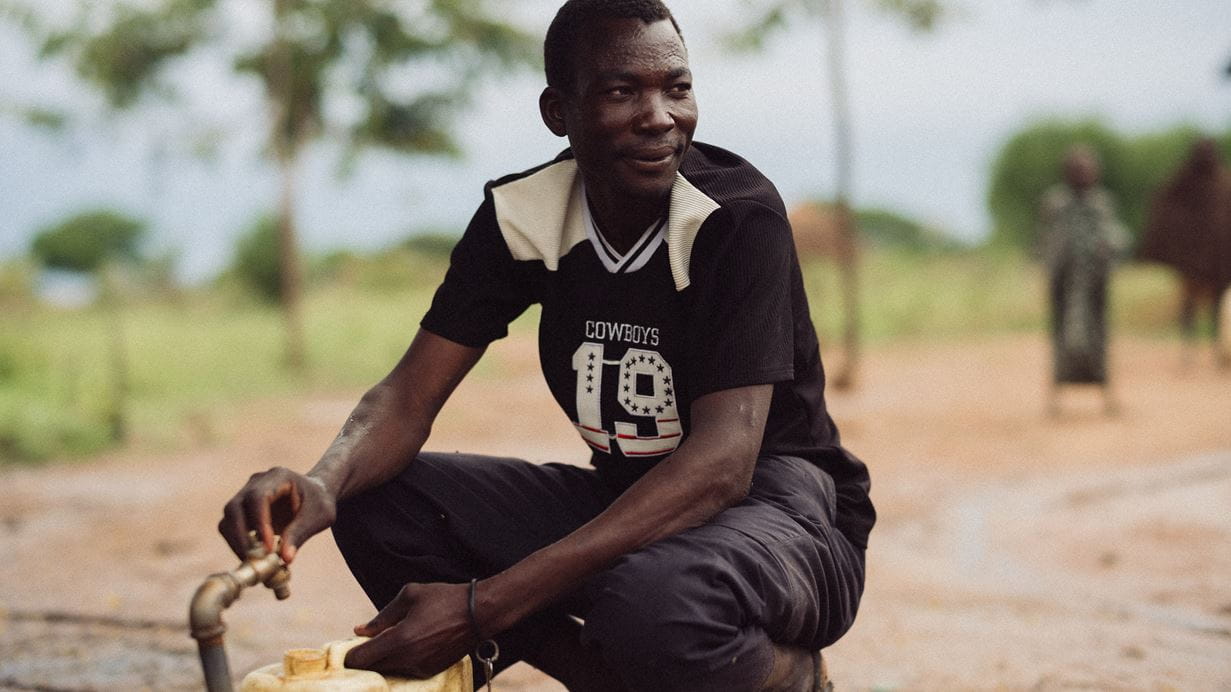
A man in a black 'Cowboys 19' t-shirt crouches, operating a brass tap to fill a yellow jerrycan. He looks to his right with a gentle smile in an outdoor setting.

Samuel collects water for the vegetables he and Magdalene are growing to provide for their family. Credit: Tom Price

‘The Transforming Communities training has given me the understanding that if I work hard, I can manage life. Now it’s become very simple. I didn’t realise before that I was courting death with how I was living and for no reason. Here is life!

‘Now I’m working hard and I’m committed to making sure my children get an education. I know in my heart I will manage it. Then, when my children finish school, they can build me a cement house rather than this wooden one!’

And Magdalene too is praying for a cement house. She says, ‘When I pray, I ask God “Since you have given me knowledge, let me work well so that I can change my family’s lives.” And I pray that we will not be hungry, but always have something to cultivate.

‘I ask God to show me what I can learn. I pray for any kind of support he can bring.

‘I especially ask that I can have a cement house, because there are so many termites in the wooden one we have.’

‘I ask everything from God, because he is a big God. If you kneel in front of him and speak to him in truth, he will answer in his grace.

‘I tell my husband, for us to be wise, we have to accept the word of God and to pray, so that we don't go backwards. We need to handle our family in harmony together – agreeing on how we do things. And bringing home the lessons we have learnt so that even educating our children will be easy because there will be no wastefulness like there was in the past.’

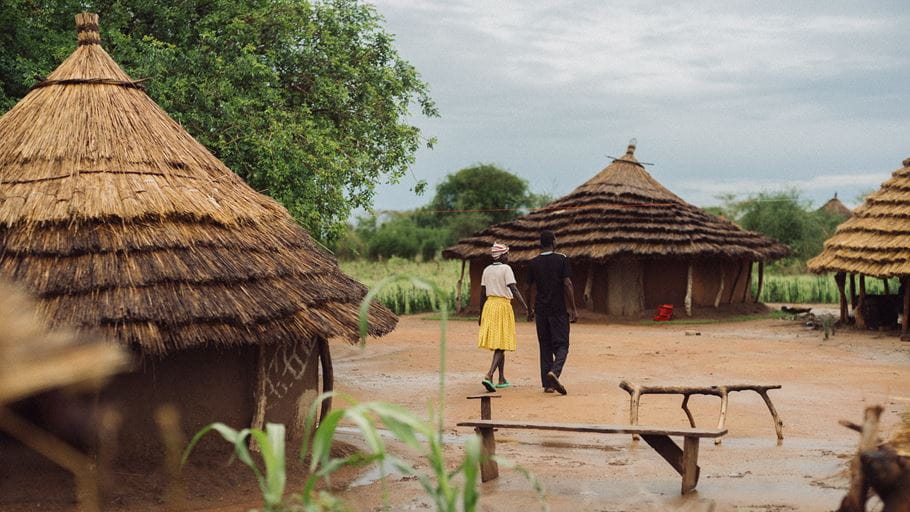
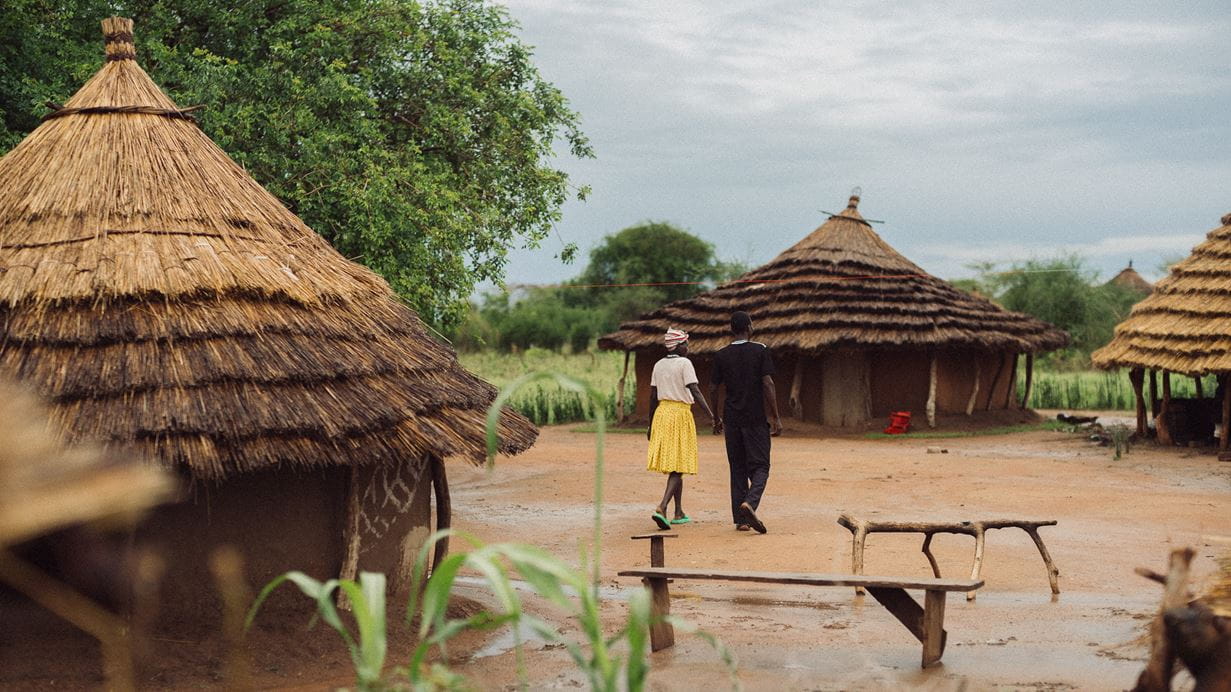
A man and woman walk away from the viewer on a muddy path, past several traditional round huts with thatched roofs, under an overcast sky.

‘I ask everything from God,’ says Magdalene, ‘because he is a big God. If you kneel in front of him and speak to him in truth, he will answer in his grace.’ Credit:Tom Price

*What are Balanite leaves (and can you actually eat them)?

Balanite leaves come from the desert date tree, which is a hardy plant found in dry parts of Africa and the Middle East. The young green leaves can be used raw in salads, or cooked as vegetables. They’re also used as animal feed and sometimes in traditional medicines too.

**What is local brew in Uganda?

Local beers in Uganda are often made from grains like millet, maize or sorghum. Particularly during severe drought and hunger emergencies, people in regions like Karamoja have resorted to eating the nutrient-rich grain residue left over from making local brews like malwa and kwete.

Pray for Transforming Communities in Uganda

    • Lift up families like Magdalene and Samuel’s who are transforming their lives and the lives of their children as they implement new ways of living that are giving them new opportunities to thrive. Pray that God will protect the work of their hands and provide for them.
    • Pray for every local church running the Transforming Communities programme. Ask God for the work to have a deep and lasting impact, and for the information to spread widely, helping people to find ways to overcome poverty.
    • Thank God for every resource he has provided. Pray that people will find sustainable and effective ways to use the resources within and around them to provide for their needs.

Written by

Written by  Tarryn Pegna

Share this page

Share this page to spread the word and help support those in need.

Get our email updates

Learn about our work and stay in touch with Tearfund. Hear about our news, activities and appeals by email.

Sign up now - Get our email updates